On the Nebulous Prospect of “The Family” as the Client

When I had my calling to work with enterprising families over a decade ago, the idea of having “the family” as my client seemed to make lots of sense, as it was very intuitive to me to want to work for the good of everyone.

The concept was presented to me during the Family Enterprise Advisor program (FEA) and since I was not yet an advisor, but instead someone who came from such a family, it seemed like an easy thing to grasp and adopt.

Thirteen years later, I can tell you how difficult this can be in practice, and we’ll look at some of those challenges here this week.

We’ll talk about neutrality, remaining “equidistant” and avoiding triangles, and some of the traps you need to look out for when serving family clients.

There’s a lot to cover so let’s jump in.


Reality and Perception Can Differ

At the beginning of a relationship with a family, when I share that I look at the entire family as my client, heads typically nod along

It sounds perfectly normal and benign.

The problem is that a family is not some unitary entity, it’s actually a whole system of interdependent beings, each with their own viewpoints, agendas, and needs.

While it’s laudable to be “all things to everyone equally”, those varying needs of the individuals can get in the way and be challenging.

Sometimes doing whatever we can to be perceived as neutral as possible is the most important part of the way we act.

I was part of yet another peer call recently when this subject came up, and I shared my view of a family I’m working with where I try to stay in between G2 and G3 and try not to let either side feel like I’m more aligned with the other.

Someone replied and used the word “equidistant”, and I noted that because I had never heard it phrased that way and I liked it (and it became the impetus for this post).


Is Equidistant the Same as Neutral?

The following month as this group met anew, the subject came up again.

This time, the idea of neutrality was mentioned, which seemed to resonate better with many on the call.

We then got into a discussion around neutrality and once again got into the part about being perceived as neutral being as important as actually being neutral.

And because this group is focused on family systems theory, we eventually got around to the idea of triangles and the fact that family members often try to bring their advisors closer to their corner of any triangle vis-à-vis others in the family.

While all of these labels are related to the same idea, they aren’t necessarily synonyms either.

But it certainly did turn into an interesting discussion and hopefully the makings of a useful blog post!


Is It Facilitating, Coaching, or Mediation?

This brings us to another, related, subject; how we label our work.

In the past, I had a business card and email signature that mentioned coaching, facilitation and mediation as the services I offered.

I have since removed any mention of mediation, because I felt like situations that require mediation are just a bit beyond my comfort zone, and because I now know other people who do this better than I can, and to whom I will refer clients instead.

In fact, as I’ve discussed with others who do offer mediation, it’s very important to decipher on the front end of meeting with a prospect, whether they’re looking for a facilitator/coach or if they are well past that stage and actually need mediation.

In the latter cases, we need to ensure that the first discussion is cut short, lest we then get labelled by the other party as “not neutral”, i.e. biased in favour of the person who contacted us.


Neutral and Ready to Engage

Wrapping up, let’s just reinforce that being neutral, and being perceived as such, is not the same as being dormant.

When the engine of my car is running, even in Park or Neutral, it is “ready to go”, and to serve it’s intended purpose.

I hope I’ve underscored some of the challenges in having the “family” as your client.

Every person needs to feel comfortable believing that you are there for them, at all times.

Distinctions Between Knowing What and Knowing How 

Writing about a niche subject like family business and wealth transition challenges on a weekly basis is bound to see me repeat some ideas, especially since I’ve been doing it every week for well over a decade.

Such is the case this week, and I almost ended up revisiting something I addressed in 2021 with way too much overlap, but caught myself in time to readjust this post.

As sometimes happens, witnessing someone share an idea in a new way just in time for me to incorporate it here was quite serendipitous.

So whereas I had initially thought about contrasting only skills and knowledge, adding in the concept of attitude will give my thoughts a fresher edge.

So let’s get going.


Knowledge Isn’t Enough

The main thrust of this piece was to be my highlighting that in order to work with families as a facilitator in the governance space, knowledge, i.e. “what to do”, is not enough.

Because this work is more about process than content, and more about relationships than structures, having the communication skills to guide a discussion is an absolute necessity.

The idea of writing about skills came to me recently when I saw a TV commercial encouraging young people to join the “skills trades”, in order to begin to tackle some of Canada’s economic headwinds like our housing shortage.

We can’t just “know” that we need more housing, we need people with the skills to build it.

And in order to get people to want to get those skills, we need to begin to change their attitudes towards those trades.


The Desire to Obtain Required Skills

Back to the matter at hand, working with families who want to transition their business or wealth to the next generation, knowing what they should do is only the first, small, issue.

Having the skills to engage with them so that they can have the important conversations amongst themselves on how best to do that, given their particular circumstances, is probably even more important.

Too often, very knowledgeable professionals have done a great job of helping these families put together the structures to hold and grow their wealth, with very little thought as to how the actual family members will need to interact with each other to make everything work.

I’m happy to relate that more and more of these experts are beginning to recognize the need to go deeper with these family clients, and are looking to level up their skills to engage with their client families in this way.

The attitude towards such skills is evolving in a good way.


Does Attitude Precede Skills?

Back in 2021 in Skills Vs. Knowledge in Family Enterprises, we looked at the idea that interpersonal skills are an important asset for advisors to work on if they hope to help families.

While many advisors worry about getting too personal with their clients, if you want to remain “sticky” with the families you serve, it becomes key to embrace the attitude that you need to show them that you care.

During a PPI thought leader call recently, David York, whose ideas I’ve shared here a number of times over the years, addressed this point.

He noted that while some advisors shy away from personal topics out of a fear for not wanting to become their client’s therapist, that’s not the best way to look at it.

“You don’t have to be their therapist to ask questions, to show that you care about them, to be their friend”, is how he put it.

Again, this begins with an attitudinal shift.


Practice, Practice, Practice

Like with so many skills, the more you practice, the better you get.

But it all starts with adopting the right attitude towards this work.

You don’t need to get to the point where you feel like someone’s therapist to ask them about their family members.

The knowledge that makes professionals able to serve business owners is what gets them to the table.

But developing the skills to have deeper conversations with their family clients is what makes them indispensable.

Adopting the mindset of being a caring friend is probably the simplest way to think about it and get started.

And then keep practising and it will come more naturally with time.

Skills can be learned and improvement can come rather quickly too.

A Unique Event on the Family Enterprise Calendar

After well over a decade in the family enterprise field, there are some events on the annual calendar that I try to never miss.

I guess I’m a creature of habit because I show up pretty much every year at a number of events, perhaps because I like to go places where I run into friendly colleagues.  

See Where Everybody Knows your Name, and Job 

My “big three” are the annual Symposium of FEC (May), PPI’s RendezVous (July) and the FFI Conference (October).

If you search any of those terms on my website, you’ll find a blog after each annual iteration, sort of my “I was here” tag, along with some thoughts and appreciation for that event.

I just returned from one that’s a bit off the beaten path and a bit more niche, but that’s unique and special in so many ways.

The 13th SG-FECC, or Schlesinger Global Family Enterprise Case Competition, just wrapped up in Burlington Vermont, and it was a big hit once again.


Time Flies and the World Evolves

I missed the inaugural edition in 2013, but have attended almost every one of them since, including virtual versions due to you-know-what a handful of years ago.

When I was first invited in 2014, I was a true “newby” to the field, having just completed my FEA studies a few months prior.

The world of family enterprise and my view of it have evolved since then, and the event has continued to make little improvements along the way.

The quality of the students and the experience they get from participating is superb, and playing the part of a judge is also fulfilling, which is why I continue to accept their invitations to take part.

The fact that I can drive there in less than 2 hours, while so many need to carve out travel days to attend also plays a role.


Plus Ça Change…

Let’s start by looking at a few things that haven’t really changed.

(That sub-head above is the first part of the French version of “the more things change, the more they stay the same”.)

No matter where on the planet the teams come from, nor whether they are undergraduates or graduate students, they always present unrealistic timelines for the family governance pieces of their proposed solution to the case.

It never fails.

This time one team suggested getting a family council established and getting a shareholders’ agreement all wrapped up in 3 to 5 months; good luck with that.


The Pre-Meeting of the Judging Panels

Each day while the students are working on their presentations and slide decks, the judges all assemble together in a room so we can do our preparations.

We sit with the teams/panels who will work together and talk about the case as a large group and then as part of our individual judging panel.

This is where I always share that when we leave the room, because we have all “hashed out” the case together, we will feel like we have covered all the bases… but we’ll be wrong.

It never fails that at least one of the teams who we see present will come up with some idea that nobody in the room brought up.

That will never change, nor should it.


My Evolving View of Participants

When I first took part in 2014, my own children were in high school, so the presenters were older than them, and I viewed the participants in an aspirational way, i.e. I hope my kids can be this good.

Now, with my offspring having graduated University years ago, those I am now judging seem so young!

The good news is that the recent introduction of “fast feedback” right after each presentation allows judges to highlight some good points and areas for improvement, right after the Q & A.

Asking these (barely) 20-somethings to avoid addressing people many decades their senior as “you guys” was a welcome opportunity for me.


And The Winners Are….

Congratulations to this year’s winning schools, Bishops University (Canada) in the undergraduate league and Sasin School of Management (Thailand) for the graduate division.

I’m hoping to be back next year.

Every year I leave Burlington with great hope for the future, after witnessing such bright and enthusiastic young people who will surely become great future leaders.

Congratulations once again to Dita Sharma and her huge team of student volunteers.

A New Year and a Clean Sheet of Paper

It’s early January, which has many people looking ahead with a fresh perspective, and hopes for a great year ahead.

There isn’t necessarily anything magical that happens when the calendar changes years, but it’s as good a time as any to take stock and think about how we can make the future better.

I have a natural tendency to look at things from a longer term perspective than most people, a habit inherited from my father, which has served me well.

Because I work with families who are preparing for an intergenerational transition of one sort or another, it’s also pretty important that I be looking far out into the future, to help them see around proverbial corners they might not have imagined yet.


The Need to Double Back – (Two Steps Forward…)

In these weekly blogs I like to share my thoughts about the challenges that doing this work with families brings with it.

A particularly frustrating part of guiding families on their journey is that the pacing of the work is so hard to predict.

See When a Family Trip Becomes an Expedition.

Family members usually enter the work with someone like me with high hopes of progress, and it helps when we can offer that hope, but that progress is rarely simple or quick.

During a recent conversation about this with a colleague, they mentioned that this work is “iterative” and that really resonated with me.

So let’s look at how iteration fits with my title about starting fresh or starting over.


Starting Over Feels Too Negative

Let’s dispense with my bias right away; the idea of “starting over with almost anything makes it feel like everything that came before was a waste of time and effort.

I get that this is how family members sometimes feel when things stall and we need to get into yet another iteration of discussing a subject, but this is where I will always reframe it to highlight the progress that’s been made.

Making a fresh start, from a new point of departure, feels more like you’ve been making some advances, even if it’s really only the fact that you’ve now found yet another way that didn’t work, and can cross it off the list.


Getting Closer to a Resolution

Let’s go back and explore a bit more about the concept of iteration, with the help of my friend Mr. Google.

I’ll cut and paste some of the salient phrases that came up on my search:

  • the repetition of a process


  • as a means of obtaining successively closer approximations to                     the solution of a problem


  • a new version of a piece of computer hardware or software

As I work with a family it’s not uncommon for someone to express frustration and ask “Didn’t we already settle this?”

My typical reply is “Yes, but…” and then some explanation about how it now appears that we no longer have a consensus around whatever resolution we thought we had, so we need to re-address it with fresh eyes.

The last point above relating to new versions can also be used to reframe things in terms of “version 2.1, or 3.0” of something the family is working on.


Yet Another Opportunity to Start Fresh

Getting into a regular meeting cadence with a family offers regular opportunities to make a fresh start.

The family convenes and we remind one another of progress made previously, and we try to make new headway.

See Ideas on Dealing with the “Family CRAP”.

It doesn’t always go as planned but as long as the family members are sharing and hearing one another’s perspectives, and efforts are made to better understand each other, that’s good.

Agreeing to meet again soon to further advance discussions is also key to sustaining some kind of momentum.


When You Really Are Starting Over

Family governance work can be prone to stalling out at times, for any variety of reasons.

There can be fatigue and a couple of delayed meetings and there’s a need to begin again.

This is often an opportunity to change up the outside experts you’re using, like bringing in a new coach for a sports team after a slump.

Often when I have arrived on the scene I am not the first person they’ve ever hired for such a role, and so I try to add something fresh, so we’re not just rehashing old stuff.

We’re always looking for progress, not perfection.

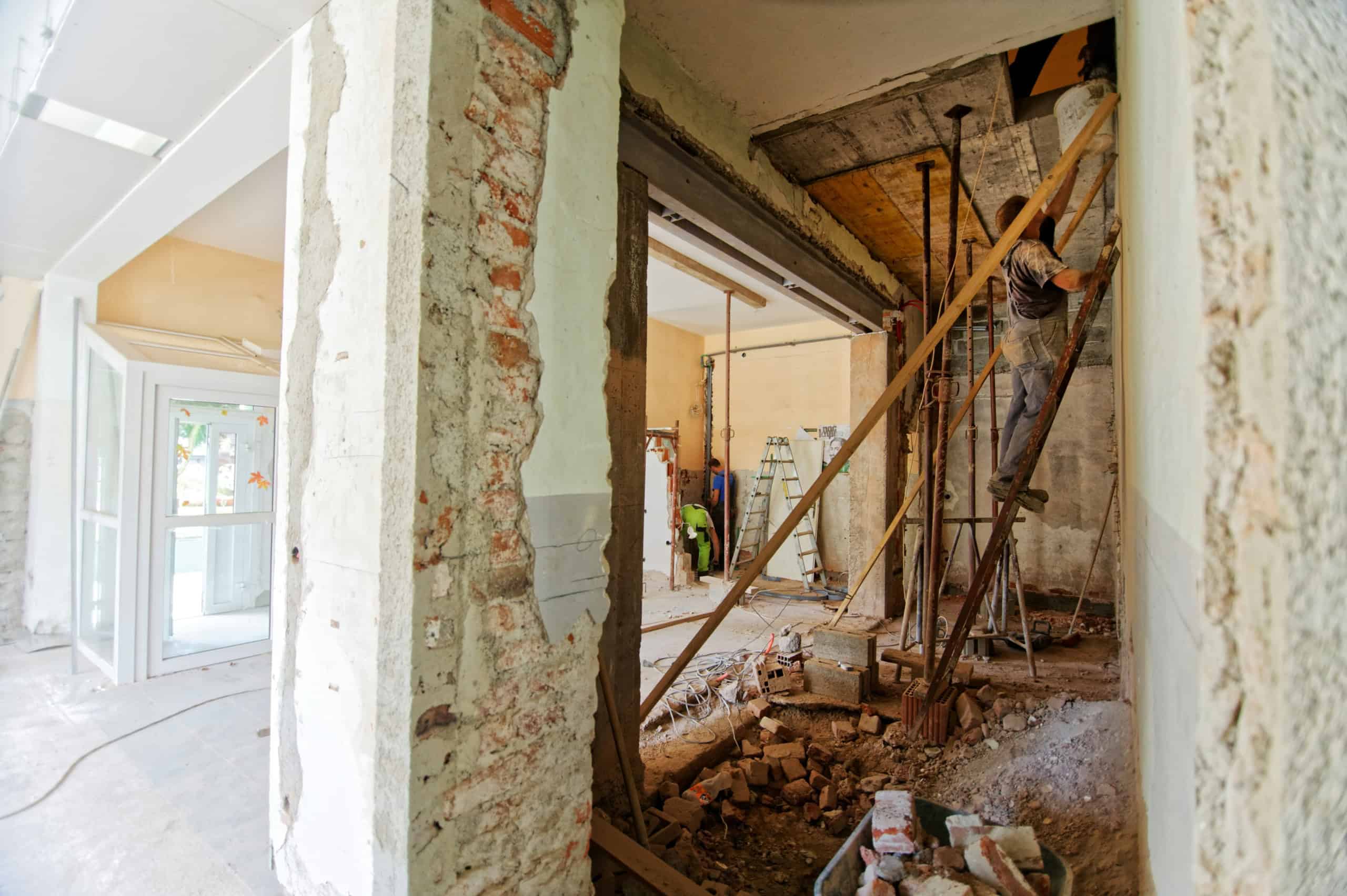
How Family Governance Is Like a Home Reno

Each week here I love to try to find new and useful (and entertaining) ways to talk about my favourite subjects, i.e. the challenges faced by families who are preparing an intergenerational transition.

Whether they still own an operating business or not, there are a variety of things that they need to work on to increase their odds of success.

And while the work that I do with one family will undoubtedly be helpful in some way with another, there isn’t necessarily a lot of predictability in this work.

It was during a recent discussion I was having with some colleagues that one of them gave me a fresh angle on the unpredictability of this work, which we’ll now explore together.


We Never Know What We’re Going to Find

Nearly every intervention with a family begins with some sort of information gathering phase, typically called “discovery” or something like that.

But because every family is different and their situations are all unique to them, we can’t usually forecast too far ahead what the next phase will look like.

This is because we never know what we’re going to find until we start the work.

Just as I had completed uttering some version of those last two sentences, one astute co-worker replied, “Oh, yeah, like a renovation!”

“Hmmm”, I said, thanking her for the blog idea, “I’m going to use that!” (Thanks C.C.)


Status Quo No Longer Sufficient

As we start to explore the similarities between a home renovation and the beginnings for some family governance work, let’s start at a logical place, the beginning.

I daresay that any renovation project begins with noticing that the status quo no longer serves the purpose for the future, so the family begins to imagine how they could modify the structure of their home for their future.

Similarly, a family might begin to notice that what got them “here” is not what’s going to get them “there”, and decide to think about new ways of interacting and structuring their important discussions about their future together as owners of their assets, as they prepare for a future with new people in leadership positions.


Dreaming About How to Make It Better

So after the family comes to the decision that they need to make some modifications, they’ll eventually get to the point where they understand that they will need to get some expert outside help.

Obviously some of the renovation work will need to be entrusted to professional tradespeople at some point, but even in the initial stages, having someone meet with the family leaders to explore possibilities makes sense too.

Those leading generation family members would also be wise to include other, younger family members from the rising generation too, since the renovation project is, after all, ostensibly being done for them, right?

See Successful Planning – Who Should Be Involved? from 2015.


One Step at a Time

As someone who loves analogies and metaphors, I also need to frequently acknowledge their limits; there is always a point where they break down.

But pointing those things out can also be useful and illustrative, so that’s the pivot we’ll embark on next.

Whereas with a home reno project, you will probably end up with some idea of what the end product will look like, family governance work doesn’t necessarily have an “end product”.

We can talk about providing more place for the kids to play in the home and we can talk about setting up a family council, but how clear those plans will look in each person’s mind’s eye will differ widely, especially in the latter case.


The Longer Term View, Not a Never-Ending Project

In both cases, people call in outside experts because something isn’t going the way they want and they recognize a need for help making changes.

For a building project it can be nice to start fresh and build new, because you don’t have to worry about what you might find once you start knocking down walls.

Once you have done the initial discovery work, you can start to get a much better idea of where you are going and what you need to start to work on first.

Until I haven’t spoken to all the family members in depth, it’s usually way too early to know what is going to come of the project.

And taking a much longer term view can help it not feel like a never-ending project.

Or Refreshing Your Views on What It Is

As yet another year is about to disappear into the past and we look out ahead at a fresh calendar ahead of us, I want to throw out one last idea that came to me a couple of months ago.

Regular readers know that I’m always looking for fresh ways to talk about the challenges that families face as they prepare for an upcoming generational transition of their business or wealth.

I pick up various ideas along the way, assemble them into some kind of memorable combination, and try to share them here on a weekly basis.

Along the way, more and more people have been picking up on my writings, so I continue to oblige you with my missives.

I’m immensely grateful for the positive feedback I get from these blogs, in case there’s any doubt about that.


What Are You Paying Attention To?

A couple of months back, in a context I’ve since forgotten, I heard someone mention that you can tell a lot about what is important to someone by trying to focus on where their attention is placed.

I work in the world of family wealth, and some people focus on the wealth part, while others, like me, prefer to focus on the family part.

More and more advisors to such families are recognizing the need to take a more holistic view and try to integrate both, with varying degrees of success.

But the families themselves are also susceptible to focusing too much on one to the detriment of the other.

The subtitle of my first book (SHIFT your Family Business) way back in 2014 was Stop working in your family business, Start working on your business family.

I hope you can see both contrasts I was making there (family vs business; working in vs working on).


Show Me Your Calendar and Bank Statements

On a related note, I’ve heard on more than one occasion the idea that if you want to know what’s important to someone, you can get a very good idea by looking in just two (or three) places.

“Show me your calendar” gets at the idea that if I can see where you spend your time and what kinds of things you’re doing with it, I will get a very good idea of your priorities.

Likewise, if I were to look at your bank statements and see where your money is going, that would also have lots of useful evidence.

If we add in your credit card statements (that’s #3) I bet I’d have a pretty clear picture of what you enjoy doing and what you hold dear.

Okay, so where’s all this going?


Attention, Time, Money – Your “ATM”

If you’ve been paying really close attention to what I teased in the title above, you’ll have noted that I was walking you through a mnemonic; ATM, for attention, time, money.

If you think I may have created the “Family ATM” idea as a false narrative to draw in readers who might wrongly assume I was going to write about parents who regularly feel the need to dole out cash to their kids, well, you may be onto something.

But of course the two ideas are far from mutually exclusive!

Families who pay attention to the messages that their parenting sends, and who spend their time educating their offspring about the value of money and about the family’s wealth, are less likely to feel like an “automated teller machine”.

Additionally, a family that spends a small part of their money on hiring outside help to deal with this subject are likely to feel even less solicited by “cash calls” from their rising generation.


Peppet’s M/L/F Ratio Revisited

Last year in How Can a Family Office Enrich You, I shared an idea from Scott Peppet that I love.

He talks about the ratio of time that family office people spend on what he calls their three main areas of focus, which he calls the M/L/F ratio.

Those letters stand for Money, Legal, and Family.

He contends that most family offices are around 70/20/10, and I think that’s the same ballpark I’d put them in too.

But he and I both agree that the Family number should be much higher.

The families themselves should also be monitoring their ATM’s.

Are you spending enough time considering all the human capital your family has to offer?

Common Understanding Depends on Clarity 

This week’s post may turn into a bit of a rant about the words that I’ve heard some people use in certain situations that make me shudder because I feel like they are unclear or badly chosen.

We’ll go through a few examples to set the stage and then hopefully move into some lessons for families and their advisors as they work together in preparation for an eventual transition from one generation to the next.

As it turned out, I heard a couple of these utterances in quick succession recently, and that put this on my radar.

It also made me think about how so often the key word that rubs me the wrong way is a verb.

Let’s jump in and see where this takes us.


Working with a Coach

For the first example, I need to begin with what I consider to be the proper verb.

I am a coach and I have a coach (as all good coaches do).

When I think about this kind of relationship, I always talk about “working with” a coach.

Imagine how my ears reacted when a was sitting in a room listening to a presentation and I heard someone mention that another person was seeing a coach”!

Yikes; wait, what?

Clearly the person speaking is either confused or ill-informed.

You see a therapist or a psychologist or name another profession here, but you do not “see” a coach.

No disrespect to anyone who is seeing such a person, I don’t want to add to any stigma around that.

Perhaps if you are dating someone who happens to be a coach I will excuse it, but otherwise, NO.


Being Part of a Board

The next example comes from having heard someone mention that they sat on a board.

Having done my share of sitting on boards over the years, there was a lot more work being done than just the sitting.

I recognize that there are some boards where there are a bunch of people who do little more than sit, but I’ve never been part of one and likely wouldn’t stick around if that were the case.

I prefer to say that I am part of a board, and being part of one for several years recently was very rewarding for me and I learned a lot from it.

Yes, there are “seats” at a board table and they are led by a “chair”, but please, no sitting on boards for me.


Doing an MBA

The third example has been living inside of me for a few decades, since I did my MBA.

There was in fact plenty of “doing” during those two years.

My pet peeve version of this one is when I hear people talking about “getting” their MBA.

If you feel like you just “got” an MBA, as opposed to putting in the effort to “do” it, then it probably wasn’t worth it.

If I mention that I’m going to stop at the grocery store, my wife might ask me to “get some milk” (and I’ll typically reply “Yes, Dear”).

You don’t just pick an MBA up off the shelf.

Much like the sitting on the board, it’s all about the meaningful effort and lived experience.


The Family Enterprise Angle on All This

I noted off the top that this missive might seem like a bit of a rant and so far it probably comes across as such.

But I typically bring my thoughts together in a way that can be useful to families as they work on transitioning their business or wealth to the next generation, so allow me to attempt that now.

I encourage people who are part of an enterprising family to work with a coach, because the perspective they will gain from that will surely be worthwhile.

I also suggest that families put together some sort of board with independent (i.e. non-family) members, and hopefully one where there is more than just sitting going on.

It need not be a full fiduciary board, put at least a formal advisory board often makes sense.


Go Do an MBA

Finally, especially if your family still has an operating business, by all means consider doing your MBA.

Make sure you go to a school where there will be lots of “doing” involved, because that’s the part that makes all it worthwhile.

It’s Better to Prepare for the Long Haul

This week we’re going back to the world of metaphors, which is familiar territory for me and my regular readers.

The inspiration for this post comes from a recent peer group call, where one colleague had just returned from a trip to the base camp of Mount Everest.

The facilitator of the call said she couldn’t wait to hear about his trip, and he quickly corrected her saying that it was not a trip, but an expedition

The next voice on the call was mine, thanking him for the metaphor that I’d be turning into a blog post about family governance, and so here we are.


A Guided Family Governance Journey

Every week in this space we look at the challenges faced by families as they prepare to transition their “enterprise” from one generation to the next.

Note that the word “enterprise” in that sentence is shorthand for “business(es) and/or wealth and/or assets” owned together as a family.

As someone who enjoys working as a guide for such families on their governance journey, I’ve seen first hand how much of an expedition this work can turn into, which is much more involved than a simple “trip”.

I’ve written about this work as some sort of voyage on a few occasions, as well as the fact that my work ends up being a bit like that of a tour guide.

See: Progressing Up the Family Governance Mountain and Going Far? Go Together. I’ve also noted the guide aspect in Choosing your FamBiz Tour Guide.


Just What Are We Getting Ourselves Into?

Another important aspect to consider when thinking about this subject is that most families who embark on this work enter into it without a firm understanding of how involved it can become.

So while the advisor/facilitator may recognize that it can turn into a full-fledged expedition, we’re sometimes better off selling them on a simpler trip, lest we scare them away.

Of course at the outset, even the one guiding the family never really knows the extent and breadth of the work ahead of us all, but because we have experienced other versions of the journey with other families in the past, at least we have an idea of what it might look like.

If a family is only prepared for a trip, it’s best that they have engaged a guide who’s also experienced in expeditions, who can help level the family up and support them along the way.


More Than Just a Day at the Beach

Let’s take a look at this metaphor with the help of my good friend Mr. Google, to see how he can shed some light on the contrasts between a trip and an expedition.

The definition of “trip” is: an act of going to a place and returning; a journey or excursion, especially for pleasure.

For “expedition” we get: a journey or voyage undertaken by a group of people with a particular purpose, especially that of exploration, scientific research, or war.

I’ve got to admit, that last part about “war” threw me off a bit, although it certainly emphasizes the degree of difficulty or danger involved in an expedition versus a trip.


A Group Journey with a Purpose and Some Exploration

Let’s look at some of the words that resonate when considering the world of families preparing to transition from one generation to the next.

It certainly is all about the group as opposed to an individual.

There is indeed a particular purpose, although I can assure you that it is rarely completely clear to all family members, especially at the outset. 

The importance of making sure the purpose is clear to everyone cannot be overstated.

I really love the part about exploration, because when done properly, there is plenty for the family members to explore about each other as they develop their abilities to work together as they integrate the family’s wealth into their future lives.


Discerning the Next Steps of the Expedition

Families and their individual members make progress at different speeds, so the facilitators who guide them need to continuously try to gauge what they can handle next.

It’s also very difficult to plan too far ahead because you never know what is going to emerge next.

As they decide on what values they hold dear, that will affect how they see their vision and their mission.

All of these parts are intertwined and require flexibility and lots of repetition to keep everyone safe on the journey.

Choose your guide wisely.


A Question with Many Different Answers

When you tell people you work with successful families who are planning to transition their wealth or business to the next generation, you often get lots of curious questions.

The queries are all over the map of course, but it usually doesn’t take very long before they want to better understand just what kind of wealth level we’re talking about.

As someone who is loathe to peg a specific dollar figure on this, I tend to get creative with my responses.

While it’s very true that the complexity level of the particular family is more important than their financial net worth, few people are satisfied with that answer.

So this week, we’re going to examine the question, “How much wealth is enough?”, from a couple of viewpoints.


Let’s Start at the Highest Level

Of course the highest level version of the question is a more existential one, i.e. “How much is enough?”, and that one also resonates with the same demographic.

Those who are driven to build a business do often continue to work on building ever more wealth, even when they have already accumulated more than they could ever spend in their lifetime.

I suppose those like me who work with such people should be thankful that these people exist, because without them we would have way less work!

But this post isn’t about that version of the question.

The spark for this blog came from a lunchtime conversation at a recent conference with someone I just happened to sit next to that day.


Is There a “Sweet Spot” in the Wealth Pyramid?

My lunch companion also works with family clients in a similar tranche of the “wealth pyramid”, i.e. not at the base with those typically labelled as the “mass affluent” or “penta-millionaires”.

Nor do we normally get asked to work with those at the very top, who we may term “mega-billionaires” or even just “regular” billionaires.

In between, there’s a space that normally gets lumped into the “Ultra High Net Worth” (UHNW) category.

The actual dollar values that various people ascribe to the upper and lower limits of that category fluctuate with time and depend on who you ask, of course.

For the sake of simplicity, I’ll share the most common figures I’ve heard, which have the lower end in the $30 – 50 Million area, and the top end somewhere between $500 Million and $1 Billion, give or take a rounding error.


Counting Families, Branches, or Households?

Our conversation got more interesting when we got to the number of family members we deal with, which likely arose when I brought up complexity.

But then I offered my preferred simplifying metric instead, which is to look at the number of households that are to be supported by the family wealth.

Let’s go there now, because this is where my A-Ha Moment from that discussion came from.

The founder starts a business to support one household, that of his immediate family.

Fast forward a generation, and assuming they have three offspring, that becomes four households, as each branch starts their own nuclear family.

When you repeat that after another generation, the numbers can grow quickly.


Numerator vs Denominator, from One Gen to the Next

Whereas at the beginning of this post we were looking at the numerator in the equation, we can’t forget about the denominator, and that’s people or households.

The complexity grows as the wealth level and number of family members increase.

But let’s get to the A-Ha Moment I teased above.

At the lower level of the UHNW space, when you think of a family with, say $40 Million of net worth, that’s significant as long as we’re talking about one household.

If that’s now going to support 5 households (assuming four branches), you’re now looking at a seven-figure dollar number for each, and the threshold for serving such a family may no longer be reached.


Nine-Figures, So It’s Still Eight After Dividing

My “revelation” during that discussion was that you almost need to be looking at a nine-figure number for a family, so that after the next generational transition, you’re still looking at eight figures per household.

Investing the time and effort into family governance doesn’t make sense at all levels of wealth.

Families will only make those investments when they can see the value over the long term, and their tranche in the wealth pyramid can play a big role.

Each Generation Has Its Own Timeline

Working with multiple generations of a family is always challenging for plenty of reasons.

One of that’s almost always present is the that each person in the family is on their own timeline, based on their age and life stage.

While it may seem counterintuitive, the younger ones, who presumably have a longer life ahead of them, are typically less patient, while those closer to the exit are rarely in a hurry to change things.

This week we’re going to look under the hood at some of these issues from the point of view of a practitioner working with a family, attempting to reconcile some of these natural differences.


An FFI Breakout Session as Inspiration

Regular readers are used to learning that many of my inspirations for these blogs come from conferences I love to attend where peers share their work for the good of the whole ecosystem.

A few weeks ago in Boston at the FFI Conference, I was privileged to introduce a couple of dear friends who were leading such a session, and the hardest part of being their host was that I was also charged with ending it on time, and yet nobody in attendance wanted to leave!

While I took lots of notes, one of them continued to jump off the page at me, and it was the quote, “Yes, but Grand-Dad isn’t there yet”.

My presenter friend was relating a story about a granddaughter who was frustrated with the pace of change in her family, which she shared with their family coach and facilitator.

He was stuck in a role familiar to me and many in the room that day, as the one working between the generations, trying to bring them together.


Close to Home with My Own Clients

It isn’t always Grand-Dad. 

This anecdote rang true for me with a current parent I’m working with, where their rising gen is showing some impatience with the pace of change that the family leader is willing to accept.

Hard earned wealth typically comes with certain character traits that make those responsible for it reluctant to release the control they’ve always had.

Such loosening of control over decisions rarely happens quickly, and impatience from the younger family members is unfortunately the norm in most cases.

There is no quick fix, and this is just another illustration of the necessity of looking at these questions in terms of a long process rather than a single event.

It’ll take some time before Grand-Dad gets there, and that’s perfectly normal and understandable,


The Human Capital Angle

The beginnings of this post were in my mind the other day during a peer call that brought it back into focus.

A colleague was sharing her frustration with a client who was a business founder, and she noted that he displayed low empathy.

Others on the call noted that this is unfortunately rather common for hard-driven founders.

As someone who believes strongly in the importance of human capital, this bothered me.

When I think about a family’s human capital, it means that every member of the family is afforded the ability to become their best self.

Any family that has amassed significant wealth is in a position to use some of that wealth for the benefit of each family member.


Wealth as a Magnifier

Like so many other complexities that affect families and their relationships with each other, wealth if often a huge magnifier.

A family of lesser means may have similar issues, but the presence of significant wealth can blow things out of proportion quickly.

It’s unfortunate when I see families who have the potential to use their wealth positively for the family’s human capital, but where the low empathy of family leaders creates resistance, and actually decreases it.


A Guide to Accompany the Family on this Journey

Let’s wrap up by looking at the role that a coach or facilitator can play when guiding a family on such a journey.

When people from each generation can sit together and have civilized and productive conversations about sensitive topics like this, progress can be made.

It isn’t easy for families to have such discussions on their own, so the courageous ones bring in an outside, independent specialist to hold the space for them.

It can (and does!) make all the difference in the world.

We can get Grand-Dad there, with some time and patience.