Weighing the Costs of Being Together

Just about every family has at least some members who view themselves as “one big happy family”, although many of those also include other people who view things quite differently.
While many strive for the “family of affinity” goal espoused by James E. (Jay) Hughes Jr., few achieve that status.
When I begin working with a family, one of the first things I try to sense (i.e. look for and listen for) is how much they seem to enjoy each others’ company.
I recently heard a new term to describe situations where simply being together with relatives is instantly uncomfortable.
If you read the title of this post, you’ll realize I’m referring to the term “emotionally expensive”.
Section 01
The Student Becomes the Teacher
I’m fortunate to play several roles in the ecosystem of the family enterprise world, including one where I serve as a project team advisor to participants in the Family Enterprise Advisor program, which happens to be where I found my calling way back in 2013.
It was during a weekly call with my current team (my eighth!) where they were preparing for the family meeting during which they were going to share their findings that one of the team members used a term I hadn’t heard before.
The family they were working with had a conflictual sibling situation and he mentioned that this was currently “emotionally expensive”, which I immediately jotted down. (Merci K.E.)
It was not something I’d ever heard phrased that way, and yet it resonated immediately because of its simplicity and clarity.
Section 02
Let’s Try This Out in the Real World
The best way for me to know whether an idea or an expression has legs is to try it out in the real world.
So, after hearing about something being emotionally expensive that first time, I decided to test it out, casually at first.
I shared it a couple of times with colleagues first and it seemed to land well with them.
Of course, sharing something with other professionals is one thing, because it’s kind of like preaching to the choir.
What would happen if I used this expression with family clients who have some real emotional situations that they’re living through?

Section 03
The Return of An Old Client
As it so happens, I had a client a few years ago where I’d become the only person that all the siblings trusted enough to run their meetings for them.
While I was never able to help them resolve their disputes, I did keep them from suing each other for a few years, which was an accomplishment.
They had initially engaged me during the pandemic after the estate of their late father had finally been resolved though the courts after many years.
Their mother died last year, and they’re now trying to put her estate to bed without the need to go to court, and they’ve reached out to me for support.
As an aside, this case is the reason I no longer use the word “mediator” to describe what I do, because there are lots of other people who do this better than me, and I now refer others in for such situations.
Section 04
Really Expensive Relationships, Emotionally
As of this writing, I have had one-on-one calls with two of the brothers and I threw in the term emotionally expensive once with each of them.
It landed perfectly with both, as they acknowledged that the situation they are in, which has them tied together for financial reasons, was costing them a lot in other ways.
These are people who would not spend time with each other but are forced to do so for reasons that are not of their own choosing.
The problem is that they’re stuck, and because there’s still a financial stake in this that’s too large to ignore, they will likely remain stuck for a while longer.
While it’s easy to say “buy me out”, that doesn’t make it feasible in real life, especially not in real time.

Section 05
A Family Project Is Not for All Families
When family members, usually siblings but then also cousins, are forced to be involved together there’s always a trade-off.
See Who’s In and Who’s Out of the Family Project.
The benefits, mostly financial, are assumed to outweigh the costs, which are less visible.
Those costs can be very high and can eventually outweigh the benefits in ways that are only really understandable by those who have lived them.
At A Glance
The Hidden Costs of Forced Togetherness
Tap each card to reveal the idea.
+Idea IListen for Enjoyment First
“One of the first things I try to sense is how much they seem to enjoy each others’ company.”
+Idea IIName the Cost
“Emotionally expensive… resonated immediately because of its simplicity and clarity.”
+Idea IIITied Together by Money
“The situation they are in… was costing them a lot in other ways.”
+Idea IV“Buy Me Out” Isn’t Easy
“That doesn’t make it feasible in real life, especially not in real time.”
+Idea VCosts Are Less Visible
“The benefits, mostly financial, are assumed to outweigh the costs, which are less visible.”
+Idea VINot for All Families
“Those costs can be very high and can eventually outweigh the benefits.”
On Inclusion and Belonging in Groups and Families

Regular readers (thanks!) know that I’m involved in a number of groups of professionals who work in some area of the space I work in. See On Peer Groups and Feelings of Infidelity.
All such groups go through phases of evolution, and the way things have always been done needs to be refreshed from time to time.
As it turns out, a few of my groups are at such inflection points, and in some of them, the actual membership of the group is in question.
This evoked thoughts about how we think about and discuss important questions, like the ones in the title of this post.
We’ll start by examining this in groups of unrelated people and see how things apply in families, especially those hoping to transition their wealth (in all its forms) to the next generation(s).
Section 01
Self-Directed Peer Group Stories
One of the peer groups I’ve enjoyed being a part of for the past few years is moving from a paid model, where a membership fee is what gets you in (after pre-qualifying), to a self-directed group set to begin in the fall.
This is a huge change, because the onus of organizing and facilitation will fall on volunteers instead of “staff”.
At our recent final “paid” meeting, the discussion around how we (may or may not) move forward was quite lively and yet not necessarily conclusive.
This will involve not only who is in or not, but who will be responsible for what.
Section 02
The Ever-Growing Membership Model
Another group has been around for decades, and the culture there was such that if you ever came to one of the annual retreat weekends, you were a member for life.
This has created an unwieldy number of people on our email list and difficulty in knowing who is even interested in still being part of the group.
We’re at the early stages of implementing an annual membership fee to weed out those who would prefer not being contacted anymore, but I can tell you that those discussions have been much more involved than you might expect.

Section 03
A Few More for Good Measure
Yet another group I’ve been a part of has seen its leadership change hands every few years, and we no longer have someone monitoring attendance so as to remove those who are AWOL.
And yet another group, one that’s “included” in one’s membership in an institute, is currently figuring out who gets to be part of one of its many “learning circles” as we move into our second year of operation.
Having members not show up and yet maintaining a waiting list for others has become problematic.
Finally, a group I created in 2020 is now undergoing our own self-reflection on how we continue to evolve, although that membership has typically been governed by who I’ve chosen to include.
Section 04
Who Gets to Be Part of the Family Project?
One of my favourite ways I’m brought in to work with a family is helping them get started on their “family governance journey”.
Nobody reacts well to the word “governance”, so I like to think of it (and sometimes talk about it) as a family project.
The simplest way to explain it in many cases is to say that we’re trying to figure out the best way for “my wealth” to become “our wealth.”
So obviously, deciding who gets to be part of this project needs to be done with great care.
But while this is easy to say, it’s not necessarily easy to do.
See Who Gets to Decide Who Gets to Decide, and Continuity Planning: Who Is at the Table?

Section 05
“The Family Has to Decide”
All the veterans of this work will say that these decisions need to be made by the family, and they are correct in that it is not up to an outsider to make decisions like this for the family.
Some families would likely prefer to have someone else impose such decisions so that they could then proclaim innocence before anyone who did not agree.
The toughest questions surround whom to include, and when.
I always suggest starting small, because it is easier to add people later than to remove someone.
I also have a suggested rule that nobody is forced to come to family meetings, even if they are invited to participate.
A family project will evolve with time, and the goal is to have decisions become more democratic over the years.
Get started with a small group and go from there.
At A Glance
Rules of Thumb for the Family Project
Tap each card to reveal the principle.
+Rule IReframe Governance as a Project
“Nobody reacts well to the word ‘governance’, so I like to think of it as a family project.”
+Rule IIFrom “My” to “Our”
“The best way for ‘my wealth’ to become ‘our wealth.’”
+Rule IIIThe Family Decides — Not an Outsider
“It is not up to an outsider to make decisions like this for the family.”
+Rule IVStart Small
“It is easier to add people later than to remove someone.”
+Rule VInvite, Don’t Force
“Nobody is forced to come to family meetings, even if they are invited to participate.”
+Rule VIGrow Toward Democracy
“The goal is to have decisions become more democratic over the years.”

This week we’re going to an unexpected place, because I hadn’t planned to write about this topic, but feedback from colleagues has forced me into it.
As regular readers will know, whenever I hear something that is even moderately “blogworthy”, I send myself an email to memorialize it, and then it sits there until I either write about it or discard it.
Occasionally, an idea will arise, and I’ll write about it immediately that week, and it never even makes the “Blog Ideas” folder in my Gmail account.
But this week, I was inspired by what I almost thought was a “throw away line” but that got legs when the feedback it elicited made me realize that I could no longer ignore it.
Section 01
The Nebulous Nature of Working with Families
Almost everyone I speak with about the work that I do with families becomes quite curious, and it feels like most of them never really understand what I tell them about it.
I used to blame myself for this, thinking that I wasn’t conveying it properly.
I’m now much more forgiving of myself, because most colleagues who do similar work also have the same challenge, and few have a simple way to overcome it.
The biggest issue we face is that while we want to bring each family we work with to a “better place” and help them make progress on their journey together, we don’t know exactly where they want or need to go.
But we somehow convince them that we’re the right person to help them make the journey go well.

Section 02
The Subtitle of an Upcoming Book
The “throw away line” I mentioned before comes from a colleague who’s a psychiatrist, and he was talking about yet another book that he’s working on.
I don’t recall the title he’ll be using, but his working secondary title is along the lines of
“I don’t know where we’re going, but I’m pretty sure I know how to get there”.
That sentence so resonated with me, and each time I’ve shared it with someone since then, I typically add “that’s the story of my life”.
It also reminds me of another colleague who states that he never wants to bring any client to a place that they haven’t already indicated they’re willing to go.
As advisors to families, while we can try to lead them to where we think they should go, we’re usually better off trying to guide them to where they’re trying to go.
Section 03
Leading from the Middle?
It turns out a very similar line,
“I don’t know where we’re going but I know exactly how to get there”,
comes from a book called The Lion Tracker’s Guide to Life by Boyd Varty. (I just ordered it).
While I don’t plan on tracking lions through the jungle, I do plan on continuing to guide families who face the challenges of transitioning their wealth or business from one generation to the next.
I like to refer to this as leading from the middle.
I use the guide analogy frequently, as I picture myself as a tour guide for a family.
Some members are running ahead and others straggle behind, and I’m responsible for keeping them together and getting them through the journey safely.
Remaining somewhere in the middle of the group makes sense in that context.

Section 04
Going Far Together, On a Journey
A decade ago, in Going Far? Go Together I shared my thinking on families slowly going together on a journey.
In 2018, in There Is No Destination we looked at the fact that in life, there is in fact no destination; life is all about the journey.
Living in the “now” is the key, and it requires me, as a guide to a family, to continually ask the same question, again and again.
“What does THIS family need, NOW?” (from 2025).
Section 05
Where Are We Going? I Don’t Know. But Follow Me!
Each family is different, and they need to be met “where they are”, and then we need to help them figure out where they want to go together.
Even though I don’t know where that is (because they aren’t usually sure themselves) I’m confident that their odds of going somewhere positive are greater with my guidance than if they were left to themselves.
I may not know “exactly” where that is, but I will help point out their progress along the way.
A Great Vibe and Plenty of Learning

Each year I have a few can’t miss events on my calendar that fill me with energy because I get to spend time with others who really get what I do.
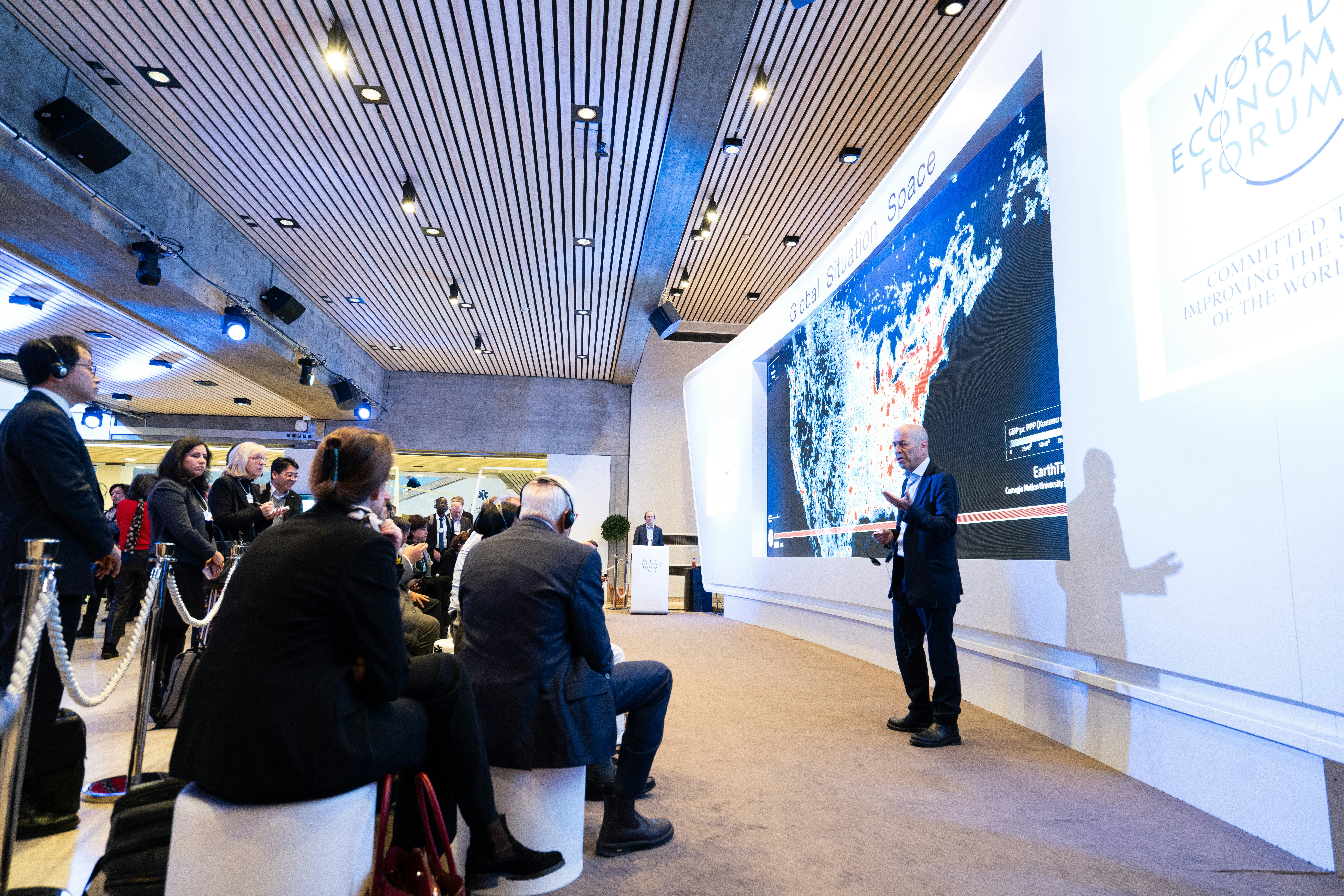
The recent Family Enterprise Canada annual Symposium in Vancouver is the latest, and this post will be where I share some of my best takeaways.
So much content makes this both an easy blog and a difficult one to write; no shortage of ideas, but probably not enough space to cover them all.
Oh well, maybe I’ll write another blog next week, like I’ve been doing for the past 650 weeks or so.
Section 01
“I’m a Relationship Guy”
The first day began with An Inspiring Family Story about the Stevens family and eponymous company.
One of my favourite quotes seemed to be a “throw away line” from Jay Stevens:
“I’m a relationship guy. My brother was a relationship guy. My Dad was a relationship guy.”
It was said in a way that landed so nicely with me, because, well, I guess I’m also a relationship guy!
And family businesses led by such people probably outperform ones led by, say, a numbers guy.
Section 02
Based On a True Story
The first keynote was done by Fotini Iconomopoulos, a negotiation expert, and my favourite nugget from her was to avoid making statements that begin with “I Think…”
She called them the two most dangerous words in a negotiation, and she suggested replacing them with two different words: “Based on…”
That evening over dinner, my colleagues ended up giving this a try.
Someone started saying “I think…” and I gently corrected them and pivoted to “Based on…”, with the same ending to the sentence, and we all started nodding along, acknowledging how this tiny reframe landed so much better.
Section 03
Founders: I Don’t Want to Interfere
In a breakout session about stewardship and founders’ ability to let go, Rocky Mountaineer founder Peter Armstrong left us with a gem:
“Founders don’t want to interfere. But they also don’t want to disappear.”
Finding the right balance to remain involved is the key.
Section 04
Jung’s 12 Archetypes
The afternoon keynote featured Jill Nikoliation who led an exercise with the audience in which we each explored our Jungian archetypes.
I discovered that I’m an “Everyman” with a bit of a “Jester thrown in.
It was interesting to see that at tables where a few family members were sitting together, their ability to reinforce the choices of some people was contrasted with others where there was some kind of reframe necessary to help someone understand how they are perceived by others.
Section 05
Effective Decision-Making as a Family Sport
Governance guru Matt Fullbrook then did an interactive keynote session where my favourite takeaway was a simple question that did not have a simple answer.
He put 10 questions on the screen and made us write down our best guess (each answer was a specific number).
But he allowed us to give a range into which we thought the right answer would land.
For example, for “How tall is Shaq?” (7’1”) you got credit for a correct response whether you guessed a range of 6’6” – 7’6” or if you guessed 4’0” – 10’11”.
Based on a show of hands, people got between 2 and 10 “correct” responses.
Then he asked, “Why didn’t everyone get 10 on 10?”. Hmmmm.

Section 06
Sharing a Poignant True Story
I’m running out of racetrack as I roll into Wednesday so I will just share what was likely the highlight of the week in terms of a shared lived experience family story that began the final day.
I’ll spare the personal details and instead provide the title from the app:
Inspiring Family Story: Legacy at Risk
Guardrails for Families Selling Control to Private Equity or Others
This fireside chat was difficult to listen to, but in the setting of other families and advisors to families, it was safe for the person sharing the unfortunate saga they experienced.
Having a family legacy almost destroyed and then having the most common response being “well you walked away with lots of money!” is something most people in the room could empathize with.
All in all, a few days packed with great learnings in a warm setting, highlighting the positive direction that FEC is heading under its current leadership.
Looking forward to doing it all again next May in Toronto.
Hope to see you there.
At A Glance
Six Takeaways from FEC 2026
Tap each card to reveal the takeaway.
+Takeaway IBe a Relationship Guy
“I’m a relationship guy. My brother was a relationship guy. My Dad was a relationship guy.”
+Takeaway IISwap “I Think” for “Based On”
“The two most dangerous words in a negotiation — replace them with ‘Based on…’.”
+Takeaway IIIInterfere — or Disappear?
“Founders don’t want to interfere. But they also don’t want to disappear.”
+Takeaway IVKnow Your Archetype
“I discovered that I’m an ‘Everyman’ with a bit of a ‘Jester’ thrown in.”
+Takeaway VDecision-Making as a Family Sport
“A simple question that did not have a simple answer — why didn’t everyone get 10 on 10?”
+Takeaway VILegacy at Risk
“Having a family legacy almost destroyed — ‘well you walked away with lots of money!’”
On Homeostasis, Iteration, and Change in Family Systems
Why Slow and Steady Is Often Best

The title of this post uses some words that are a little longer or less familiar than the kind of vocabulary regular readers are used to seeing from me.
I pride myself on writing and speaking in terms that are easy enough for most people to follow, and I typically resist the urge to try to sound like I’m smarter than everyone else.
But occasionally, there’s a word that must be used to make a point and so I will use it.
As usual I’ll spend plenty of time explaining the words, what they mean, and why I think they’re important to the subject at hand.
Section 01
Homeo-what? Homeostasis
The longer word I was talking about is obviously “homeostasis”, and it was going to be the central thesis to this post until I realized that I had another blog planned around iteration.
As I looked at my Blog Ideas folder and thought about my notes more deeply, I recognized the potential synergies, and here we are.
Let’s check with my friend Mr. Google to see what we can learn about homeostasis. Here’s what came back:
Homeostasis is your body’s automatic process of maintaining a stable, balanced internal environment, even when external conditions change.
It seems to me that part of what’s involved beneath the surface is an inherent resistance to change, and a desire to maintain whatever equilibrium is in place.
It also brings up inertia, one of Newton’s Laws that states that a body at rest tends to stay at rest, if I remember my high school physics correctly.
Section 02
Homeostasis in a Family System
Anyone who has tried to make changes happen anywhere will recognize the challenges therein.
If the system where you’re trying to effectuate changes also happens to be a family, you’re probably dealing with a trickier problem.
When the family in which you’re making these efforts also happens to own a business or enterprise, you’ve got an even heavier lift ahead of you.
Your best bet is to try for small changes, and even then, it takes time for the family members to adapt and recalibrate with each other as any change is implemented.
Change is a bit simpler when it’s done in small increments, i.e. incrementally.
And one of your best bets to make change happen is to recognize the concept of iteration, and the idea of making change iterative.

Section 03
A Blog Idea Around Iteration
When the idea of writing a post on iteration popped into my head, I Googled the word and one of the results included the following:
What does iterative mean in project management?
That’s when I realized how powerful this idea could be, if I could use the “project” idea to explain it to families I work with.
Last fall in Ideas on Dealing with the Family Crap, I wrote about getting families into the habit of Convening Regularly And Productively (C.R.A.P.)
Coming back together as a “project update” meeting, where we assess the latest iteration of where we are makes sense to me.
Section 04
Iterative Versus Incremental
The Google result on iteration in project management brought me down a rabbit hole that tried to distinguish between iterative and incremental, but I’m not sure that adds value here.
Both are part of continuous improvement but the distinction on iterative is that it involves incorporating feedback into the process.
When a family reconvenes, it’s so important to hear how each person has been evolving in their own thinking and adaptation to whatever the family has been working on improving and evolving.
This feedback allows the facilitator to gauge progress and adapt the pace of changes or modify the direction as needed.
Things naturally evolve incrementally, and reconvening to incorporate feedback keeps everyone on track together.

Section 05
Changing the Way a Family Is Together
Homeostasis tells us that change is naturally resisted, so we need to accept that and find a way through.
Iteration reminds us that we need to incorporate feedback along the way to produce a slightly improved result, and then do that again (and again, and…).
The family system concept is all about how the family members relate to one another, i.e. who the family is when they are together.
A family can continue to evolve, and looking at it as a journey or a project can help clarify why they are actually making these efforts together for the good of everyone.
At A Glance
The Slow-and-Steady Loop
Tap each idea to reveal the principle.
+Idea IExpect Homeostasis
“An inherent resistance to change, and a desire to maintain whatever equilibrium is in place.”
+Idea IIGo Incremental
“Change is a bit simpler when it’s done in small increments, i.e. incrementally.”
+Idea IIIMake It Iterative
“The distinction on iterative is that it involves incorporating feedback into the process.”
+Idea IVReconvene Regularly
“A ‘project update’ meeting, where we assess the latest iteration of where we are.”

Back in 2017, in My Beliefs on Family Legacy Advice, I shared the text of an assignment I prepared as part of my Bowen Family Systems Theory training in the Post-Graduate Program at the Bowen Center.
I just completed a year in their new Differentiation at Work (DAW) program, and participants were once again offered the opportunity to share our beliefs.
I thought I’d share it here once again.
I can see the evolution of my thinking, I hope you can too.
Here Goes:
Section 01
One Self Can Shift the System
I believe that ONE person in a system can have an enormous effect on the whole system.
I also believe that to have the most positive effect on that system, that one person must limit their efforts to making changes in themselves.
To become such a leader in a system, they must resist the temptation to over function for the others in the system and of course overcome a similar temptation to try to “fix” others.
Resisting temptation can take lots of work, but it can be done, with continued effort, attention and intention.

Section 02
Using the I-Position
When one takes a systems lens to a group and keeps their focus on the relationships between the people rather than on the people themselves, one can quickly conclude that the only relationships over which they have any control are the ones between themselves and each other person.
Such a view can help keep one out of triangles with others, which is ultimately for the benefit of all.
When a leader models such behaviour, with any luck it can become “contagious” and others will follow.
Using the I-Position is the simplest way for me to keep this intention top of mind.
Reminding myself, and others, of what I will do, and what I will not do, helps me to define myself to everyone, me included.
Section 03
Banishing the Word “Help”
Another temptation that I have learned to avoid is the offer to help others until asked.
About a decade ago in a coaching call with my Bowen coach, I expressed frustration with my wife’s resistance to accept my help in dealings with a situation in her family of origin.
My coach, Amie, asked me to consider withdrawing my offers to help her, and instead to remind her that if she ever wanted me to assist her, that I was ready, willing and able to be a resource to her.
I mentioned this to my wife later that day, with low expectations, and I was pleasantly surprised by her response.
I have since tried to almost banish the word “help” from my vocabulary to positive effect.

Section 04
Holding Position Under Resistance
For a leader to succeed in a system, it is paramount to remain vigilant to these old habits and temptations to intervene with others in ways that may be unwelcome.
When others know that you are there, know what you will do and what you won’t do, that clarity can permeate the entire system.
When adopting such strategies within a system for the first time, there can be a need to repeatedly remind others in the system of one’s I-Position.
It can take a while for others to adapt to a new stance. This is where maintaining one’s resolve to hold that position, even when there is resistance, can be a challenge.
Changes in how we relate to others in a system that we have been part of for a long time can create anxiety in others. Maintaining one’s position in the face of such anxiety is one of the most challenging parts of differentiation of self.
What will I do, what will I not do. Sounds simple.
Simple does not mean easy.
But focusing on oneself also simplifies our outlook, because we no longer need to worry about everyone else!
Section 05
The Non-Anxious Presence
I have been working on some version of this for over a decade, and it has become so important for me in my work with families.
I frequently remind myself that being a non-anxious presence within a system has allowed me to be successful in anxious situations, and this has helped me keep my focus on myself and my own behaviour.
This has helped me to respond to situations rather than simply reacting and making things worse.
De-escalation is so much more useful than escalation when working with a family system.
Being an outsider to such a system makes it much easier for me to model this behaviour than for the family members I am serving.
Lastly, I believe that I am the most important instrument or tool in my toolbox.
I must keep myself sharp and ready, so that I can properly model a calm and non-reactive way of being in every situation, in service of the client families I am privileged to serve.
At A Glance
The Four Pillars of Differentiation
Tap each pillar to reveal the principle.
+
Pillar I
One Self Can Shift the System
“ONE person in a system can have an enormous effect on the whole system.”
+
Pillar II
Hold the I-Position
“Reminding myself, and others, of what I will do, and what I will not do, helps me to define myself to everyone, me included.”
+
Pillar III
Withhold Unsolicited Help
“I have since tried to almost banish the word ‘help’ from my vocabulary to positive effect.”
+
Pillar IV
Be a Non-Anxious Presence
“Being a non-anxious presence within a system has allowed me to be successful in anxious situations.”
On Institutional Knowledge in a Family’s Continuity Journey

A couple of weeks ago, I had a few instances where the idea of “institutional knowledge” came to the fore, so I decided that this could be something around which to build a blog post.
As usual, I sent myself an email and stuck it in my Blog Ideas folder and there it sat, simmering.
Lo and behold, even more recently, another example landed in my lap, giving me a “three-legged stool” to work with.
We’ll see what my friend Mr. Google has to add, and then look at how the concept ties into the challenges that families face when working on intergenerational wealth transitions, as usual.
Section 01
So What Is “Institutional Knowledge”?
Here’s some of what my friend’s AI summary came back with:
“The collective, often unwritten information, experience and expertise accumulated by employees over time within an organization”
“How things are done, cultural norms, non-documented processes, tribal knowledge, an organization’s memory”.
There are plenty of good reasons to believe that it’s important to make sure our organization treats such experience as worthy of respecting and preserving.
And, of course, there are occasions where leaning too far into the idea has its own drawbacks.

Section 02
A Peer Group Example with Volunteers
There are plenty of posts on my website in which I sing the praises of peer groups, and every such group is different.
Most are run on a volunteer basis, and so institutional knowledge is not constrained to “employees” only.
As a relatively new member of a group that’s been running for over 3 decades, I’m seeing this at play now.
I was recently added to a committee, joining a couple of longtime members. A few short months later, I became the only member of that committee.
I insisted that we needed someone with more seniority than me and twisted the right arm just enough, and we also added a newer member.
Section 03
A Workplace Example with Employees
A couple of close family members both happen to work for the same arm of a university department.
One has been there almost since the department’s inception, the other for less than two years.
As I listen to them talk about the structural changes currently taking place, it strikes me that having institutional knowledge provides one with more flexibility in how closely one needs to follow new rules.
When you’ve been around longer, you can get away with more because they really need you.
When you’re newer, you’re easier to replace.

Section 04
A Non-Profit Version with an Employee
While writing about my own family members needs to be done carefully, so does my next example.
I was involved in a local charity for many years, and they experienced a good amount of turnover during that time.
One employee was there for so long that their seniority was probably triple the next closest person’s.
While I served on that organization’s board of directors, I constantly referred to that person as the one with the most institutional knowledge, and everyone bought into that.
One of the downsides of having so much of that knowledge in a single person is the risk to the organization when that person is no longer there.
A person may suddenly no longer be available due to an accident or health reason, a fight with their superior, or even having been caught with their hand in the proverbial cookie jar.
Section 05
What About Multi-Generational Families?
In a family, the parents naturally have more institutional knowledge than their offspring.
In my first example above, the committee lost so much of it when I became the senior person with not enough of it to play the role properly.
Giving too much power to someone too junior has risks you want to mitigate.
The second example reminds us that the rules apply to everyone in theory, but not always in practice. Families need to be aware of this and find ways to minimize this happening.
The most positive lesson from the third example is that it’s important to have younger and more junior people begin to get involved in matters earlier, so you don’t end up with the sudden exit of someone with lots of institutional knowledge creating a problem.
Knowledge should be shared with more people, and there needs to be both a “push” and a “pull” element to make this work sometimes.
And it’s never too early to begin.

Coming off a weekend spent with peers, I’m still basking in the warmth of positivity we all gave one another during our precious time together.
Existing relationships were deepened, some relatively new ones rose to a new level, and a couple of brand new ones are off to a great start.
Of course these thoughts always get my juices flowing on considering how such ideas also affect the work we do with the families who entrust us with helping them “hold their space” safely.
So that’s where we’re headed this week, looking at gratitude and feedback, and how they play into deep connections among people.
Let’s get going.
Grateful for the Professional and Personal Connection
Last year after that same peer group’s annual weekend, I wrote about how I sometimes felt like I was cheating on these friends because I also interact with peers in several other groups.
See On Peer Groups and Feelings of Infidelity
But this year when we went around the table for our check out comments on Sunday, I realized that this group is a bit different, and it actually felt like the connections were deeper.
Some combination of the size of the group, the culture we’ve developed and nurtured, the quality and depth of the conversations and just how we all seem to feel so safe to be vulnerable together, all add up to its specialness.
We have many things in common on a professional level because of the ways we all work with families, and we have personal connections.

Gratitude for Sharing in Client Conversations
During one of our sessions that recent weekend, we worked on the idea of giving feedback in a more constructive way, called “feed forward”.
My friend Mr. Google’s AI overview just informed me that this concept originated from coaching and leadership guru Marshall Goldsmith, and it’s summed up nicely as:
“a proactive, future-oriented communication approach focused on providing suggestions for improvement, rather than analyzing past mistakes”
It’s actually just a small tweak in approach, which can yield huge differences in results.
I’ve noticed myself giving feedback in one-on-one conversations with clients where I want to use this more.
I already make sure that the members of my client families know that I truly appreciate when they’re completely open and real with me.
Feedback + Gratitude = Deeper Connection
When you work with an entire family group, there’s often some sort of family hierarchy in place, which may stem from seniority in generations, positions inside the business, or even birth order.
In order to properly serve the entire family system, facilitators like me need to make sure that while we recognize that such hierarchies may exist, we are not beholden to them.
We need to make sure that even the folks who feel like they’re lower down the pyramid are important to us, and thereby to the rest of the family.
It can take a while to establish a deep enough connection with each family member for them to truly believe that while we are there to serve the whole family, that includes every last one of them.
I believe that my giving them grateful feedback, increases the odds that they buy into me as their advocate.

The Better I Understand, the Better I Can Serve
Trying to reconcile each person’s desires, viewpoints, fears, and wishes is complex enough when you don’t actually understand what those are.
When I sense that an individual has been vulnerable with me by sharing something that they likely haven’t shared with others in the family, I thank them and remind them that I can best serve them and their family when I get each person’s true input.
When your professional work can sometimes be summed up as “family relationship specialist”, it’s important to develop and maintain deep connections with every family member.
If I want to help a family get along well enough so they can come together productively to make important decisions about their common future, they all need to trust me enough to allow me to play that role.
Building and Maintaining Trust Is a Forever Challenge
So whether we’re dealing with peers who also do this kind of work or with the family member clients themselves, the way we are is often at least as important as what we do or what we say.

Following last week’s post Funeral Musings on Family Member Evolvement, this week we’re returning to the subject of character traits that often get handed down through one’s DNA.
As someone who frequently works with several members of the same family, usually from more than one generation, this idea is never really far away.
Of course it’s easy to read way too much into this idea, and make assumptions about how a member of a rising generation “should” be just like their parents, and we need to be careful of that.
This past week, while speaking with a colleague, I shared a self-reflection regarding my own parents and how I turned out, and the conversation that followed has led us back to this idea here.
Partially Inspired by Prince?
The recent ten-year anniversary of the passing of Prince may be why some of his lyrics jumped into mind as I talked about how “just like my father” I was (or was not).
As I spoke about how different we were, and how I’m 1000% sure he would not do well in the roles I’m called to play when working with a family, the song When Doves Cry came to mind.
“Maybe I’m just like my father, too bold” is an oft-repeated lyric.
My relatively recent realisation that I inherited more useful traits from my mother for my current career is a fact I now often share.
“Maybe you’re just like my mother, she’s never satisfied” was about the woman in the couple in the song, but I ended up thinking of how my Mom’s personality rubbed off on me in positive ways.
Facilitation Is Not Telling People What to Do
When I imagine my Dad taking my place in a meeting with a family, I see things unfolding much differently than with me facilitating.
He was a smart and successful businessman, and he was always very sure of himself.
I jokingly say that if he were leading a meeting instead of me, it would go much faster!
“You, shut up”.
“You, you said you were going to do X, but you haven’t done it yet.”
“You, do this.”
“You, do that.”
“Listen to me, I am right”.
It would be much more of a one-directional monologue than a dialogue.

What Traits Are Needed in Successive Generations?
Enough about me and the role of a facilitator, the families I work with are typically led by someone who has been successful, and they eventually become concerned with the leadership of the family after they’ll are no longer be “in charge”.
There can be a tendency to look for the person in the next generation who is most like this leader, on the assumption that what got you here is going to be what it takes to get you there.
That can work, but it isn’t the only way, and is often not recommended.
When you work with family enterprises, you quickly realize that there’s an extra couple of layers of complexity to deal with.
First of all, the family considerations invariably end up mattering at least as much as the business realities.
Secondly, the ownership of the assets and how around how that’s expected to transition from one generation to the next makes things extra complex.
Leading the Business Vs Leading the Family
The qualities of a person who will be competent to lead the business are not always found in the offspring of the current leader(s).
And sometimes great qualities are there, but they aren’t the same qualities as the current leadership, so they aren’t properly recognized by those who need to figure this out.
And let’s not forget about leading the family, isn’t that also important, especially if the family is planning to continue being the owners of the business or assets?
What Was Needed Then, What Will Be Needed Later
One of the easiest examples of different leadership needs for a business can usually be found between the founder in the first generation, commonly labelled “G1”, and the second generation, “G2”.
The skills and risk taking of an entrepreneur that are required to get a company off the ground are not something everyone has, and I’m not sure they can be taught, except under certain conditions.
But taking a successful company and maintaining it and keeping it on the rails, while juggling ownership by various family members requires skills as well, and they aren’t necessarily the same ones!
Book a Free Introductory Call