Goldilocks Advises a Family Business (Part II)
Last week we looked at advisers who work with business families, bringing the perspective of an outsider to a family system.
That perspective allows them to see things that the family members themselves have difficulty noticing.
With time, such advisors can learn enough about the family’s workings to also begin to benefit from the knowledge of the family insiders.
Of course, there’s a fine line to be struck here, and it’s one that experienced family business practitioners clearly recognize and constantly try to manage.
Getting Too Close
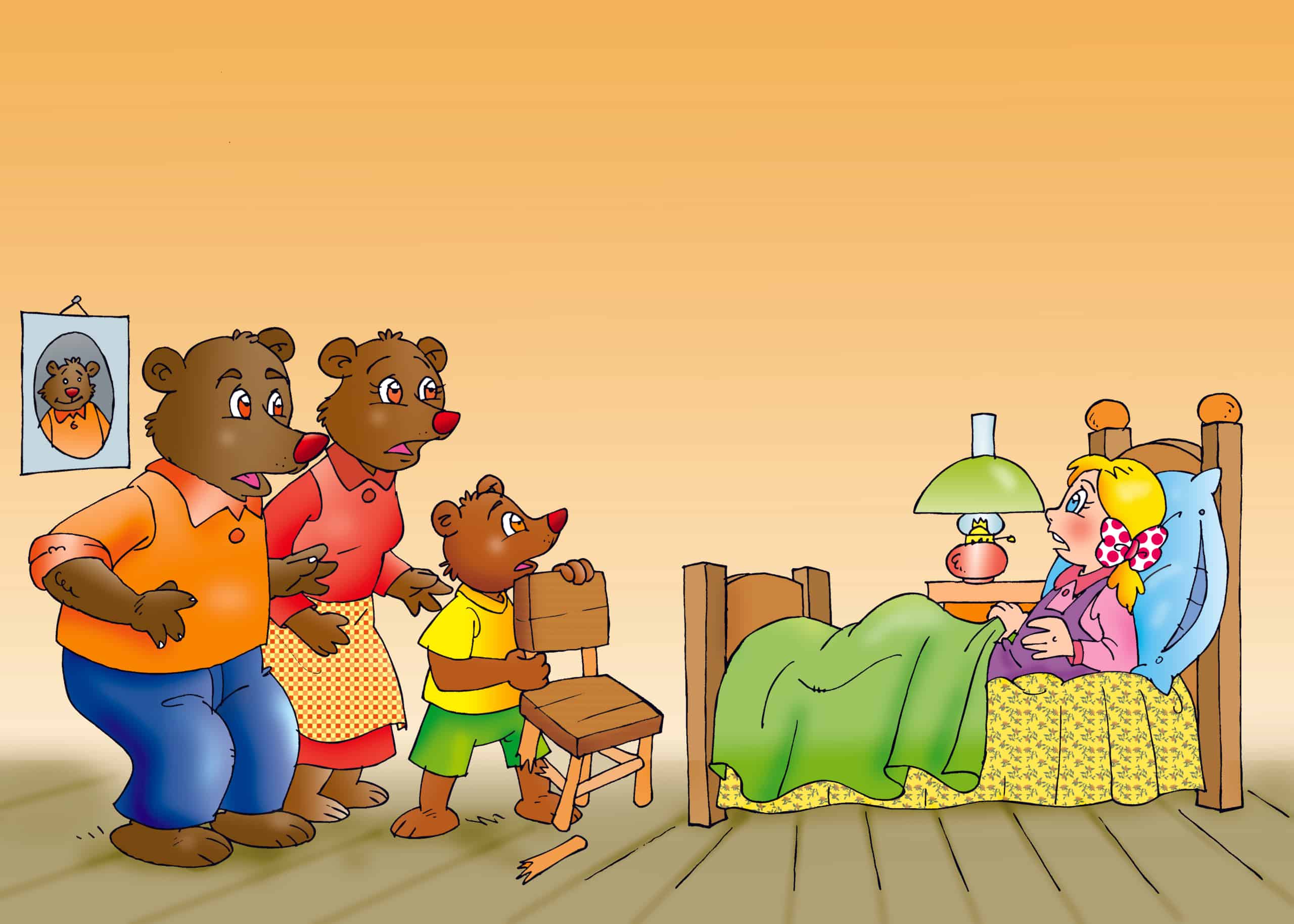
Much like when Goldilocks tries one of the bowls of porridge and finds it too hot, she gets burned, consultants can also be too quick to act and get too close to the situation to properly maintain their objectivity.
This can happen very early on in situations, especially where there’s some conflict between family members.
Any outsider needs to be extra mindful of how they enter the family system, in order to maintain an objective stance towards everyone.
If one sister “brings me in” to a situation with her family, and there’s an issue with her sibling, it won’t take very long for me to be branded as “her guy”, and then my chances of being seen as neutral will be lost.
Who Hires FamBiz Consultants, Anyway?
A few years ago, in Notes from a Great Keynote, I related some statistics from Craig Aronoff, one of the founders of FBCG, about the percentage of families that actually hire an outside consultant at some point.
He stated that somewhere between 2% and 4% of family businesses actually avail themselves to what he called “private lessons” from an outside party.
That means that 96% to 98% of families never hire an outside consultant to work with them, which seems high to me.
Not as Easy as It Looks
Part of the reason the numbers are so low comes from the fact that this work is not easy to do.
Family businesses are very common, all over the world, but that doesn’t mean that they’re simple, or that there’s some magic formula to the business model.
When I’m invited into a family’s inner circle, it’s always a privilege and an honour to be there, in a place they do not typically allow just anyone to enter.
And when you’re there as a “process person”, there are plenty of things that you need to be on the lookout for.
Watch Out for the Hornet’s Nest
There are potential hornet’s nests around every corner, and if you aren’t careful, you might accidentally kick one and cause more of a stir than you had planned for. So it’s best to tread slowly and carefully.
In addition to being mindful of not being seen as one person’s “guy”, it’s also important to develop and maintain individual relationships with each of the key family members, even those who might appear to be “less important” at the outset.
In a family, every person is important, even though they may not all appear outwardly to be, and even if some members act as if they are more important.
In fact, outsiders who work at these relationships on the “lower rungs of the ladder” will eventually be rewarded.
Another Way to Go: Just Coach One of Them
Being on good terms with all family members can be a balancing act, and some consultants master it better than others.
There is another way to go that I’ve been discovering and liking more and more lately, and that’s to just work with one person from the family, as a coach.
Last week I mentioned that a family is a system, of interdependent people.
A system typically finds an equilibrium, but if one person changes, the system will necessarily change too, eventually, assuming the one person has the strength to maintain the change themselves.
One Family Leader Can Make a Huge Difference
In many ways it’s a much easier starting point, because getting the agreement to work with a single person is typically quicker and the learning curve is shorter when you’re only dealing with one person.
Naturally when I coach a member of a business family, I learn about all the other members too, but I’m not the one who interacts with them.
It’s still all about process, only I’m working with the “family leader” on the best way for them to interact with the rest of their family.
And in the end, sometimes that’s “just right”.
What Could Go Wrong?
Metaphors have always been one of my favourite ways to explain things, but sometimes, admittedly, I can twist things a bit too far.
I hope this won’t be one of those occasions; apologies in advance if it is.
So be forewarned that this is not actually a story about a young blonde girl who advises a family business (or a family of bears).
Insiders, Outsiders, Goldilocks?
The genesis of this post is actually an introduction I heard on TV about an upcoming guest on a show I happened to be watching.
It was an American show, and the guest was an Irishman who spends half his time in the USA, and half his time in Ireland.
The host proclaimed that this gives the man,
“The knowledge of an insider, and the perspective of an outsider”
Bang, there it was. I actually paused the TV, rewound, and made sure I had the quote right.
Finding the Right Balance
I instantly thought about situations where a family business, or more specifically, a business family, calls in someone from outside the family to work with them.
Of course that’s because this is exactly the kind of work I love to do, when I’m not writing about fairy tales.
Many families are loath to bring in anyone from the outside, preferring to keep everything in-house, within the family, for fear that outsiders cannot be trusted, or believing that nobody else could ever understand “our family”.
They’re wrong on both counts, and we’ll get to the reasons why, but for now, let’s look at this “insider / outsider” dynamic.

Perspective of an Outsider
We’ll start with the perspective piece, because this is truly the biggest reason to enlist the services of an outside family business consultant.
Any person who is not a part of the family is also not part of the “family system” as those who use a systems theory lens would say.
The family system is called that because of the interdependent nature of the relationships that the different members have on one another, thanks their many common goals, and to the way that they interact on a long-term, repetitive basis.
An outsider, especially one trained in this kind of work, can instantly offer that family system the benefit of their outsider’s perspective, precisely because of what they are able to see, thanks to the fact that they are not part of the system.
When I peer into my aquarium, I see that the fish are all swimming in the tank. I’m pretty sure that the fish don’t see things the same way.
Knowledge of an Insider
Naturally the person who isn’t a part of the family won’t have the knowledge of an insider who’s been a part of the family their whole life.
But that doesn’t mean that, with time, they can’t come to know the individual members of the family, and how they work together, pretty well, all the while maintaining their outsider’s perspective, which is so valuable.
In fact, a good outsider knows the limits of how far inside they want to go, knowing that if they ever lose their outsider’s perspective, they suddenly become a less valuable resource to the family.

Special Case: In-Laws!
We’ll get back to this Insider / Outsider stuff next week in Part II, but we need to acknowledge a special category of people who happen to exist somewhere in most business families, and who somehow live long periods of their lives in this “twilight zone”, in between insiders and outsiders.
Often the in-laws try desperately to be included among the insiders of the family, with varying degrees of success. Somehow many of them are never truly accepted as insiders, and sometimes for good reason.
It also occurs that the efforts made to become insiders can negate any outsider advantages they might have had to begin with!
In-laws each have their own reality to face, and some learn to live with the cards they’ve been dealt better than others.
Looking Ahead
Next week, in Part II, we’ll look at what percentage of business families actually hire outside consultants, as well as things that outside advisors need to be aware of, as they are welcomed into the sacred world of a business family’s inside workings.
As Goldilocks taught us, not all situations are “just right”.
Writing a weekly blog and being one’s own editor can involve making some interesting choices at times. This week I decided to use a term in my headline that’s actually one that many of my colleagues try to avoid.
But, the term “soft stuff” (and its derivations “soft skills” and “the soft side”) does in fact nicely convey the stark contrast between the work that we do compared with that of others, including many folks with whom we often collaborate.
There’s no shortage of words I could’ve used to make my point, but I settled on the Soft/Hard contrast here, for reasons I hope will be appreciated.
The “Normal” Uses of Due Diligence
Actually, my choice to go “soft” was mostly related to its contrast with the other phrase in the headline, “due diligence”.
And thanks to Google, we can quickly type in “due diligence meaning” and get this:
- Reasonable steps taken by a person in order to satisfy a legal requirement, especially in buying or selling something.
- A comprehensive appraisal of a business undertaken by a prospective buyer, especially to establish its assets and liabilities
Those definitions seem clearly aligned with what most people would agree are “hard stuff”, or quantifiable, legal matters that all businesses need to consider, especially when looking at a company’s ownership transition.
What About “Emotional & Interpersonal Due Diligence”?
Let’s start with a hat tip to Ron Reece, a US colleague I met recently as part of an FFI Course that’s part of their Advanced Certificate Program.
As the FFI faculty member, I reach out to all the students in the course to arrange a Zoom meeting early on, to get to know them and where they are in their journey.
The course is about Family Governance, and everyone in the class comes to it from different angles, so it’s truly a privilege to learn about their personal experiences.
During my intro call with Ron he shared a term that he’s been using to make his point about the importance of the work he does with families.
He told me he calls it “Emotional and Interpersonal Due Diligence”.
“Wow”, I replied. “I’m gonna have to write a blog about that”.

The Most Important Due Diligence?
Ron’s a psychologist, so he can pull off this kind of lingo better than most, but even guys like me who come from a business background can see how this can actually be the most important part of any due diligence process.
In fact, it deserves to be highlighted, especially in cases of family business succession, precisely because there’s likely to be less of the “regular” due diligence going on because the “transaction” is probably more of a “family transition”.
I’m having an A-Ha moment as I write this, so bear with me as I flesh this out.
Transactions Require Regular and Thorough Due Diligence
Transitions Require Emotional & Interpersonal Due Diligence
That thought wasn’t in my head when I started writing this, which is why I blog every week, for moments of clarity like this.
Some Important Work Needs to Be Done
If you are going to sell your business to someone, the buyer should/must/will conduct some form of due diligence before completing the transaction.
So when the business is going to go from one generation of a family to another, would it not make sense for some similar form of work to happen, to make sure that everything is going to work out as planned?

Is the Shoe on the Other Foot?
What makes this trickier is the fact that every outside buyer would insist on due diligence and it will happen or else there’s no deal, BUT, in a family business situation, the “buyer” is often in a position of feeling like they are getting a favour, so the seller typically calls the shots.
And that’s precisely where (and why) things so often go wrong.
When there’s a group of related acquirers, who are beholden to the one who’s divesting, not enough attention is given to the cohesion and interpersonal relationships of the group of new owners.
What If It Doesn’t Work Out?
If the leading generation (seller) is in charge of the deal, they don’t want due diligence to screw up their deal.
They need to be made to fully aware that a failed deal will come back to haunt them, and only some “soft side due diligence” can clear that up in advance.
This week we’re talking about coaching for family leaders, both current and future. It’s a subject near and dear to my heart that keeps coming up for me lately.
I’d planned this piece a couple of weeks ago, and suddenly last Wednesday morning, something unexpected arrived in my inbox.
Well, it wasn’t completely unexpected, because I receive the latest edition of the FFI Practitioner every Wednesday morning, so that wasn’t the surprise.
But the content was very much in line with what I was planning on sharing here this week, which I found serendipitous.
The featured piece is entitled The Benefits of Coaching for Family Enterprise Leaders and Practitioners by Greg McCann.
Hey! That’s What I Was Gonna Say!
Since I was going to say much of what he wrote, I decided to share his wisdom, and add my perspectives on the matter; kind of a win-win.
McCann outlines the benefits of coaching that still remain misunderstood by many people.
He mentions “increasing the leader’s capacity for more than just the issue at that moment” and “a safe, neutral setting in which to process ideas, fears, perceptions, and patterns in their lives”, among other great points.
I’ve shared my history of trying to explain coaching to people in No, Dad, Coaching Isn’t “Helping Losers”.
Good Timing (For a Change!)
The coaching field continues to grow, in the number of trained and qualified coaches, and in its acceptance as a true field, which provides a valuable service to clients around the world.
My coach training journey began in 2013; at the time my focus was more on growing my facilitation practice, rather than 1-on-1 coaching opportunities.
But near the end of 2018 I decided that it was finally time for me to get my own professional coaching certification in 2019, and I completed that last November, through CTI.
As it turns out, my timing was impeccable.
Best Time Ever for Coaching
The sudden arrival of this pandemic has resulted in this being one of the best times and opportunities for coaching that we could ever have expected.
The new situations that everyone is now facing have created a lot more thoughtful self-reflection in people everywhere.
Coaching can be valuable for everyone, IF they understand what it is and what it isn’t, and if they are ready to embark on the journey.
While my training was geared to coaching anyone, I’ve chosen to remain focused on family business, or, more correctly, people who are part of business families.

Lonely at the Top, AND at the Bottom
Family business leaders, like CEO’s in any business, often feel lonely, because there are some subjects that they just can’t talk about with others.
Executive coaching has been a huge area where coaching clients have seen benefits, exactly because these leaders have found someone who isn’t simply a “Yes-Person”, and instead they now have a person who will level with them and challenge their thinking.
It’s easy to see the “lonely at the top” aspect, but it can also be lonely at “the bottom”, especially in a family business, when you happen to have the right (or wrong?) last name.
Been there, done that; know how powerless it feels.
One Person CAN Change a System
One of my greatest “A-Ha” moments of the past few years is the realisation that a change in one person, can and will have an effect on the whole family system, with patience and persistence.
That means that I, as a neutral outsider to a family, don’t have to work with the whole family to effect positive change, because I can actually have almost as great an impact by working with just one, motivated person.
WOW, that’s actually pretty HUGE.
Now that I’ve finally realized this, my challenge is to convey this concept to potential clients, who often feel helpless to make the changes that they know are required in their families.
It turns out that families are pretty interdependent!
Current Realities Align with Coaching Too
Regular readers of my blog know that I’ve been a big fan of online meetings via Zoom for a while already, which just happens to be a fantastic “delivery mechanism” for coaching services. See Who’s Zooming Who.
I’ve coached several people that I still have never met in person, and I imagine this will continue to be the case going forward.
Members of enterprising families are all in a somewhat unique situation, where finding a “thinking partner” who “gets” them can be a challenge.
Good news: there are coaches who “get” you…
In some ways the new realities we’re all facing during this pandemic are starting to feel like a really long car trip.
“Are we there yet?”, ask the kids for the umpteenth time.
No, unfortunately, we don’t seem to be “there” just yet.
And it may be another few hours, if we don’t have car trouble.
Finding Gratitude
As hard as it is though, it could be worse. In fact, for many people, it is worse.
Lately whenever people have asked how I am, I reply that if I took 100 random people around me, and ranked them by how much they now have to worry about compared to before, I would rank somewhere near the bottom of the list.
I try to remind myself of that on a regular basis. It’s good to have things for which we are grateful.
Gratitude, being thankful for what we do have, is an important habit that more of us would do well to adopt.
Comparing to Other People, and to Other Times
So we can compare ourselves to other people who have it worse, and admit that we have less to worry about than most of them; I suspect that most readers of this blog are in similar positions.
Business families, and those who advise them, are often part of the upper middle class, if not also part of the proverbial “1%”.
So what if we compare this pandemic to how it might have been to live through something similar in a previous decade.
Imagine a real car trip from your childhood, where you were in the back seat, bored to the point of playing “licence plate bingo” or some other lame distraction.
Back then, we were truly left “to our own devices”, whereas today’s kids typically each have their “own device”!
Still Getting Things Done
Many of us are continuing to “get things done”, even if we need to modify how we do it.
Many of us are “zooming” or using other online platforms to meet, and getting better at it all the time.
We better get used to it, because there doesn’t seem to be anything that will magically happen that will get things back to the way they were a few months ago.
And so if things will remain uncertain for a while, what can we do?
Plan for the Worst
I think that hoping things get resolved quickly and continuing to do very little else is likely the worst course of action.
The old adage of “Plan for the worst; Hope for the best” still holds.
I heard a business owner on the radio recently, who happens to be a former client, who runs a manufacturing operation with a large and growing online B2C business.
He said that they are working on the assumption that things will remain as they are now for the next 18-24 months, and they are acting accordingly.
I knew he was a wise man when he hired me a few years ago, but he proved it again just there.
Doesn’t it make sense to plan for a long period of this, and then you can hopefully unwind it early, rather than to simply patch things as you go, and hope things will come back next month?

Family Issues to Be Addressed?
Meanwhile, these past few months have likely raised some issues in the family circle in addition to the business circle.
In some ways the question “Are we there yet?”, when asked about a family’s governance, might also have a clear “No, not yet” answer.
Some of these family aspects, now that they have surfaced, may be worth revisiting, before they get worse.
Individual Development for “When We Get There”
And as long as there’s still some more time to go until we “get there”, isn’t this an ideal opportunity for some of the individuals who are part of the business family, to work on themselves to develop whatever capacities they need to work on, to be even more ready for the day when they’ll be expected to take on more responsibility?
This new, unconventional situation we are living is full of questions, but not all of the answers are negative.
There are positives and opportunities here, available to those who have their eyes open and who have the right attitude.
We may not be there yet, but we will get there.
Our new shared reality has shaken up a lot of things in everyone’s world, and many of the negatives remain at the forefront.
Being a “glass half-full” kind of guy, I’m always on the lookout for the bright side of things.
So, with that in mind, here are 5 “silver linings” for family businesses that could come out of this pandemic, for those families that are ready, willing, and able to take advantage of them.
Reflect on, and Learn from, Previous Challenges
Any family business that has survived to include more than one generation has probably gone through some sort of crisis before.
The younger family members may not have been around or old enough to understand everything then, so this is a great time to bring them up to speed with the lessons about the historical resilience of the family and its business.
Knowing that the family has held together before, and reflecting on what strengths that required, will help everyone as they look forward together.

Co-Create the Pivot
This crisis is creating an opportunity for different generations to work together and co-create the changes that will bring the enterprise forward for the coming decades.
A family with younger members involved in the business has the chance to bring in newer, fresher ideas, that can be led by younger members with more energy, more tech-savvy, and a longer view into the future.
By combining these strengths with the wisdom and patience of their parents’ generation, they can co-create whatever pivot they need to, to adapt to the new realities of the world.
Diversity is an asset, and being able to harness the best of all their human capital is something that many business families are particularly good at doing.
Bolster the Family Brand
Since this crisis began, there have been so many examples of family businesses doing the right things for the right reasons.
Especially in smaller communities, the long term support that this creates for the family brand should last a while. While this isn’t the reason to do any of these things, it can be a nice side effect.
Family companies need to find subtle and balanced ways of getting the message out there about their efforts for the common good, and in the long run they will be rewarded by customer loyalty.
Surrender the Baton (Or at Least Part of It)
Many families put off serious discussions about the future and who will become future leaders as one generation eventually steps aside and another takes the lead. It’s what many call “continuity planning”.
Given what’s been going on recently, the current leadership may get a jump on, or at least have some more reasons to consider, moving towards their next life chapter, knowing that things are in good hands.
Crises create opportunities for new leaders to step up, which may be just what the current generation was hoping for.
Someone who has taken on the hard choices you’ve all been facing recently just may be catching the eye of a leader who has been waiting for the opportunity to begin backing away, and surrendering some of the roles to them.
Many advisors are advocating for this quite strongly, for a great example, see The Next Generation Should Get Their Licence to Operate Now
Re-Emphasize Family Governance
As I wrote about a couple of weeks ago in The Crisis as a Test of your Family Governance, many families have recently realized that things were not set up exactly as they had assumed and imagined.
So, the family’s governance systems and structures may have been tested in the past couple of months. What better time than now to revisit and re-invigorate efforts in this direction?
Might it be a time for the current business leadership to shift their focus from working IN the family business to working ON the business family?
Plenty of Clouds, Even More Silver Linings
There’s no question that everyone’s lives have been affected, mostly for the worse.
But, for the families that are little bit more forward-looking, there are many opportunities that just suddenly landed on our proverbial doorsteps.
What does it take to seize them?
Well, important things don’t typically just happen by themselves, not even in the best of times.
I believe that the key lies in the family’s ability to tap into all of its human capital, from every generation.
That all starts with a family meeting to discuss all of this, and if it has to be done over Zoom, that’s OK too.
Where IS everybody?
One of my recent Zoom calls began with someone asking “Where is everybody?”
It wasn’t someone having a problem with technology and experiencing trouble with her screen. She was actually asking a much deeper question.
You might think of it as a modified version of “How is everyone”, which it likely was, but in these tumultuous times, it likely was more about “where” we each were along this journey we’re all on right now.
And make no mistake, even though most of us are confined and sheltering in place much of the time, we are all on a journey.
Stumbling Around in the Dark
Now the question “Where is everybody?” could also be something we say when we venture outside these days.
There isn’t as much “doing” going on out there for us to see, so a lot of people are now concentrating more on their “Being” rather than just their “Doing”.
When our world gets shaken up, there’s a natural tendency to look inward and reflect, and spend some time thinking about what’s truly important to us.
Even that question from earlier “How ARE you” is very different from “What are you doing?”
And even though we may not be on a physical journey, many of us are on a journey to what’s next, even as we stumble around in the dark, not knowing what lies around the next corner.
Who Do You Want to BE?
As we get a bit more introspective, we sometimes begin to think more about who we want to be, instead of simply what we are going to do.
It’s somewhat more of a long-term view.
To me, the things that we do, over and over, are a huge part of who we are, and especially who we become. It’s all part of the habits that we get into that make us the kind of person we are.

How Do You Want to Be Remembered?
Let’s now bring this back to the subjects we normally deal with in this space, enterprising families, and their challenges in attempting to transition their wealth from one generation to the next.
There comes a time in the lives of family business leaders when they start to think about how they want to be remembered.
Hopefully they begin this process early enough in the arc of their lives to still make some changes in their focus.
The current crises (that’s crisis, plural, because there are several going on, even if you haven’t separated them in your head yet) may be forcing people to think more about who they are and how they want to be remembered.
And that’s a good thing.
Legacy Definitions Vary
How you will be remembered is part of your legacy, in fact, some would say that that’s the essence of your legacy, the basic definition.
There are variants, of course, and different versions of the definition of legacy resonate better or worse with people, depending on a host of factors.
I’ve always liked this version: “Legacy is how people feel when they hear your name”, although I’m not sure where I got it. I just typed it into Google to see if I could find the source and nothing quite matched.
Perhaps my version makes more sense if we add “after you are gone”, but I prefer to think that one’s legacy need not wait until after their death.
I know that “how people feel” about me is also important to me while I’m alive too!
Maya Angelou Version
One quote that did come up during my Google searches is from Maya Angelou, and I think it fits into my conclusion”:
“I’ve learned that people will forget what you said,
people will forget what you did,
but people will never forget how you made them feel.”
At a time when there is so much uncertainty in all of our lives, I think it makes sense for many of us, especially those of us in the second half of our lives, to begin to shift more towards this kind of focus.
Doing, Being, Feeling
Working with family members typically get emotional, so our feelings are never too far away.
That doesn’t need to be a bad thing, if we can focus on what’s important, and making sure we remember how what we do and who we are will always affect those feelings.
Book a Free Introductory Call