Advising the Rising Generation 101
101 Series: E1
Transcript
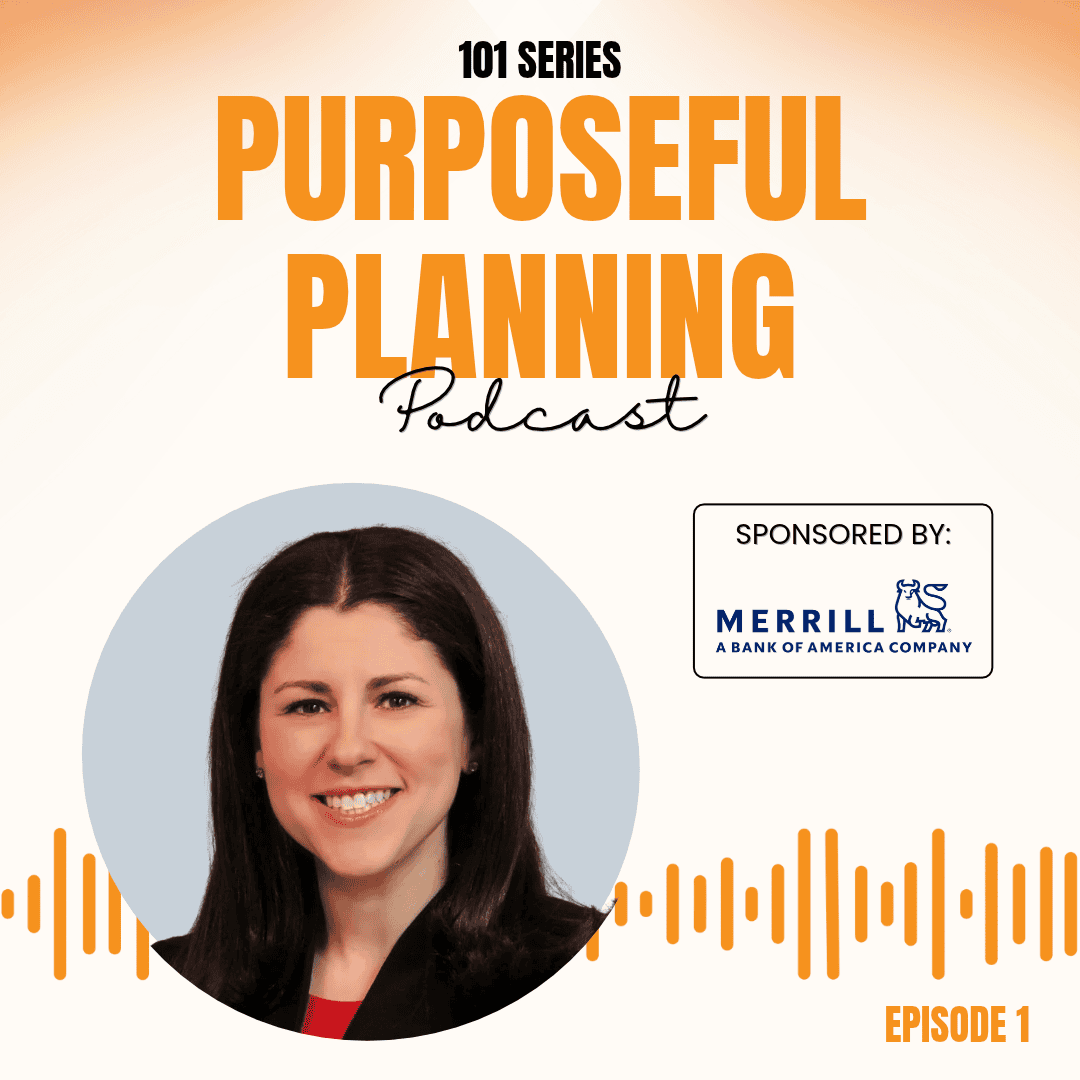
STEVE: Hello, and welcome to the premiere episode of the PPI 101 Podcast Series, sponsored by the Merrill Center for Family Wealth. My name is Steve Legler, and I’m delighted to be your host for this new series. In this episode, we’re going to be looking into the subject of rising generation family members and how they fit into purposeful planning for family clients. We’ll get into what we mean by the rising generation, why these family members matter so much in the PPI community, and where this whole idea fits into how we can better serve our client families. Our guest is Valerie Galinskaya, who’s the Managing Director and Head of the Merrill Center for Family Wealth. And if that sounds familiar, it’s because I just mentioned that they’re sponsoring this new 101 Podcast Series. Val has been with Merrill for two decades now, and Merrill’s been supporting PPI for as long as I can remember. She’s also behind so much of the great content that they’ve been contributing to the family wealth space, especially as it regards rising generation family members and how advisors sometimes need to work extra hard to reach these key stakeholders, even before their parents think there’s a need to involve them. We’re very excited to finally launch this new series, and are honored to have Val as our guest as we dig into such a fundamental topic. Valerie Galinskaya, thanks so much for being our guest today.
VALERIE: Thank you so much, Steve. Thrilled to be here.
STEVE: All right, rising generation is a term that I think maybe 10 years ago we hadn’t heard before, but then it kind of got introduced into the vernacular. And we’re recording this right after the Rendezvous, and last week in Boulder, Jay Hughes was talking about some progress that has been made in the vocabulary that we use to address our work. And he was happy to report that we no longer call this stuff soft; we now call it qualitative, and that we no longer talk about the next generation, now we talk about the rising generation. So, can you just give your perspective on this new term and how it applies to the work you do with the families you serve?
VALERIE: Absolutely, and I very much echo what Jay shared and what our team within the Merrill Center for Family Wealth have observed—specifically, really, the idea that the rising generation is a plural term. And what I mean by that is there are families that we work with where the rising generation is the second generation. If the initial wealth creators are kind of—there are elements of families, I can think of one right now, we’re working with the sixth generation in a family, and they are still rising generations. So I think really the term, to us, to me, really represents a more inclusive and more relevant form. And I think really the idea that they are not just the next, but that there’s really capacity in the family, there’s focus on nurturing family members across generations is the element that stands out to me.
STEVE: Yeah, that’s such an important part, that we don’t just think of—G2s. When it’s the founder, the G2 is the rising generation that we’re concerned with. But when we’re dealing with families that have been around a lot longer, the G3 might be the Now Gen, and the G4s are the rising. And sometimes, I know the work I do, it’s always preferable to start working with the rising gen when they’re still in their teens and 20s, and yet sometimes we get brought into families where the family leaders are in their 60s and 70s, and now we’re onboarding people into the family process in their 30s and 40s, which is a lot harder. I imagine the age range of where people fall is part of what makes this so tricky to work with in families.
VALERIE: Yeah, absolutely. In our experience with the rising generation, I can think of a very studious and mature 11-year-old, who is in the rising generation of his family. And I’m also working with somebody right now. She’s in her late 50s, and she, again, based on that definition, is in the rising generation. The one thing I would say, Steve, to what you said, certainly there’s great potential in engaging with somebody younger. But I will say to this wonderful rising generation family member who’s in her late 60s, there’s still a tremendous amount of passion and potential and intelligence and insight. So I don’t see it so much as a challenge, as just a different set of circumstances for different families.
STEVE: And meeting the people where they are and helping them to get one step closer to where they want to be. Beautiful. So why does this matter? So I’m thinking of people in the PPI community that are kind of new to our group, perhaps, and they hear us talk about the rising generation and wonder, “Why should I care, and why is it important to engage with them?” Can you talk to that a little bit?
VALERIE: Absolutely. As my team will attest, I am the so-what person. So I love this question, Steve. So I think, in responding to this, I think there are two factors. I think there’s the backdrop and there’s the context. So what I mean by that—the backdrop is what many of us have heard across many, many headlines, which is that there is a great wealth transfer right upon us. According to Cerulli, it’s estimated that $124 trillion in wealth will transfer through 2048, and a little over $100 trillion of that will go to heirs. So, needless to say, I don’t think any of us need to be sold that there is tremendous opportunity as this transfer of wealth goes to the rising generations and horizontally to spouses and partners. So that’s the backdrop. I think, Steve, the more interesting point of why advisors and consultants should really be focused on this is the context. And what I mean by that is this notion, just as you defined it, whatever generation the rising generation falls in, they are critical to making decisions. So, just to give you kind of a specific point, our team, the Center, we published research called “Pulling Back the Curtain,” two years ago where we surveyed over 250 ultra-high-net-worth clients. And part of what we were really curious to understand is, how are decisions being made in these families? And what we found is that among these families, 48%—so almost half of the respondents—acknowledged that in their families, financial decision-making was shared among two or more generations. So let me pause for a fact. So we’re talking about ultra-high-net-worth families. Nearly half of them said, “In our families, financial decision-making is shared among two or more generations.” So some families who had literally grandparents, a parent, and a child of various ages. I don’t know about you, Steve, but that’s a pretty compelling statistic. They are involved in the decision-making. Now, then we asked a follow-up question, which was to say, “If you fall in this category where you make decisions among generations, what is your biggest challenge?” And we gave them a range of options. What was fascinating to us as at the team was that technical complexity was not one of the greatest challenges. Instead, the biggest challenge that they identified was really kind of this notion of limited governance. Now, what do I mean by that? There’s a lot of jargon out there. When I say governance, I’m talking about the method of making decisions. And 54% of the people who said again, “In our family, we make decisions collectively,” pointed to challenges like undefined expectations of roles, lack of clarity on purpose of shared assets, lack of transparency in decision-making. So, in layman’s terms, what we heard from the clients that we surveyed and then we conducted interviews with a subset was really this notion of, “I may be a rising generation family member—for example, I am a G2—I make decisions, let’s say, with my mom. I love my family. I’m engaged, but we, not just I, have had a lot of challenges because it’s not always clear to me what’s the purpose of this decision. I don’t always have the skills on how to engage, whether it’s a decision about investments, real estate, philanthropy, and I’m really struggling with how we make the decision.” So that is why I think advisors and consultants should really care about this because, again, there is a huge opportunity and there’s a real need for guidance.
STEVE: What I think I’m hearing is that these families are saying that they’re making decisions together among generations, but then, when you get right into the room where the decisions are being made, it’s not so clear. And so probably a lot of those decisions are still made by one generation, although they say they’re making them together, and that they’re struggling with how to actually operationalize the group decision-making.
VALERIE: Absolutely. So again, 54%, just to get specific, said that limited governance was their biggest challenge. And under this limited governance bucket, we’re talking about all the things: lack of clarity, lack of, “What role am I playing?” And then, additionally, Steve, to your point, 26% said the biggest challenge is the family dynamics themselves. Just the way that we make decisions: maybe we have too loud of a voice, maybe we have somebody who takes over. I remember one family member was interesting—a young woman who is currently a mergers and acquisitions attorney. When I spoke with her, she said, “I don’t know how to put this any other way. I’m the youngest of four children, and we can have a conversation about real estate. And I have experience. I have real experience with deals, and I feel like they still see me as a seven-year-old. They look at me and they see me as a seven-year-old.” That is a family dynamics issue. So we helped them, which was incredibly gratifying, to talk about ground rules, to talk about how we are really making these decisions. How do we respect each other for the skills and the perspective that we could bring?
STEVE: So, as advisors to families, we get brought in by certain people, and then we hope to be able to interact with a larger number of family members to help guide them as a group. But what does it mean on a practical level to be able to, like I mentioned in my intro, that sometimes it’s hard to convince the parents that we should even have access to these younger people in the family? So, right there on the ground with you and your team, how do you actually get into these conversations with the various family members?
VALERIE: Absolutely. So, in terms of engaging with the rising generation, I think there are three core pieces that we found helpful, and I’ll kind of highlight them and go a little bit deeper. One sounds obvious, Steve: listening. Two, helping them develop relevant skills. And to your latter point there, relevant skills, and including communicating oftentimes with wealth creator or the leading generation. So that’s two. And then third, which I think maybe is a little bit surprising, there’s a lot of focus, understandably, on the families. But I think the third factor that we’ve found in our own experience and observing others that helps engage with the rising generation is also taking a pause and looking at ourselves. How do we build teams? How do we build networks? If, for example, you’re listening and you’re a sole practitioner, that reflects the rising generation that you’re engaged with, kind of this notion of mirroring and of making somebody feel heard and seen. So I would say those three things: listening, skill building and communication, and then kind of looking inward at ourselves as advisors.
STEVE: And that listening one is when I was learning coaching over a decade ago, it wasn’t just listening; it was listening without judgment. And that listening without judgment is often the hardest part. And so many of us who serve these families, we come from a place where we’re the experts, and we think that our role is to give them the answer. And so, if they say something that’s not correct, we want to correct them. But listening without judgment and meeting them where they are, I feel, is one of the huge parts of the listening aspect.
VALERIE: Absolutely. And I echo what you just said because I think it takes experience to understand this, even though, on the surface it seems like a very fundamental point of listening to understand, not to respond. And to that point, as part of listening, our team, and I know many out there, are really committed to really understanding what are the concerns, what the top priorities of the rising gen are. So, to that end, our team published a white paper that’s available to anyone who’s interested called “Charting the Course.” And essentially what we did is we surveyed over a thousand rising generation family members. And Steve, to go back to your intro comments, this ranged from G2 to, I think, G7. So we certainly saw some range there. Average age was in the upper 20s, although, again, we had kind of a range in there. And what we found in listening, to the extent that I want to provide a little bit of context, there were a few themes that kept rising to the surface. And again, the ultimate question we asked them was, “What are your top concerns or questions?” We wanted to understand and really kind of reaffirm our hypothesis, which was that what keeps the rising generation up at night may be separate and distinct from what keeps the leading generation.
STEVE: Right.
VALERIE: And there were a few themes that really bubbled up to the surface time and time again. One, and I think the biggest one, expectations. “What are the expectations of me? What can I expect?” And also, “Are there responsibilities or things that I should?” So, “What should I expect?” “What should I not expect?” and “How can I contribute?” Secondly, with a lot of families where there are siblings, there are really a lot of questions about shared responsibility, whether it has to do with a privately held business or philanthropy or even a vacation home. Additionally, there were a number of comments around identity. So, “How do I think about my personal identity distinct and separate from this family, from this wealth?” And then also a number of comments and questions around peer and romantic relationships. How do I navigate that whole universe when many of the folks that we surveyed and then spoke with said, “I’m struggling because I don’t have full information, and yet I am potentially in a serious relationship or about to get engaged or just in a partnership with someone, and I don’t know if there’s an implication here, whether it’s a prenuptial agreement or something.” So, again, a lot of the themes that kind of bubbled up were really kind of this notion of, “I would love a little bit of certainty about the context.” One rising generation family member who I still work with her family said to me this, “I am so grateful for my family. I want that to be super clear. And this feels like a black box. Whenever it’s discussed, the family wealth feels like this entity, like this thing, and I don’t know what’s in it. And I’m really struggling with how it should impact my own planning, my own perspective in the world. I just don’t know, and I’m fearful of how to ask because I don’t want to come across as entitled.”
STEVE: So, you touched on some really important stuff there about how the things that keep the rising gen up at night are not the same things that keep their parents up at night, and then this whole transparency and clarity of understanding what’s there. And I think the general question of, “Why should we care about the rising generation?” is if all we are doing is advising the Now Gen and the parents without helping them understand the importance of involving the people for whom these plans are all being ostensibly made, we’re missing a huge part of this. And so, so many of the rising gen are walking around in the dark, and they would love clarity. And as you said, they don’t know how to ask for it without seeming entitled. And so I think that’s the bridge where the outside advisors can play a role between the generations of the family. And I think for PPI members who are advising families, this is like a place to put your foot in the door and play that role.
VALERIE: Absolutely. And I think, Steve, it also dovetails to the second, when you ask, kind of back to the core question, “How do you engage?” So, one is listening. But the second is, how do you help them develop those skills? So, just to kind of weave in a specific client example, another family where husband and wife, first-generation wealth creators, both grew up actually lower middle class and were really struggling themselves with just the impact of this wealth on their children. They have three sons, and their middle son was in a very serious relationship and was about to propose. And the impetus for us actually working with the family, interestingly enough.
STEVE: Is it a prenup?
VALERIE: Interestingly enough, this was not that kind of family where we get those calls sometimes, where it’s like, prenup and the wedding’s next. It was not that. It was really more, I think…and I applaud her so much for her candor and vulnerability. She reached out through her, and then, working with her and her private wealth advisor, she really said, “Look, I’ll be really honest. My husband and I have focused on raising good kids, and we have deferred this topic. We probably should have started it earlier, but we’re fearful. We have no reference point. And now our middle son shared his plans. We really like his girlfriend. We realize we’re behind the ball because, not even prenup, we haven’t shared anything.” They had done some kind of planning. So, connecting into the idea of, listening, what the son was saying is, “I know how much my parents have sacrificed. I want to be a steward, and I recognize I am severely uneducated.” And specifically, he was pointing out, too. He said, “My parents, over the years, have referenced, at the end of a conversation, very kind of nebulously, a trust.” And he said, “I am well educated,” and he’s an engineer. But he said, “I have to admit, I have no idea what that means.” So, once they put in some other jargon, he said, “I disengage.” So part of our work with the family and with him in particular was really to say, “Okay, first, what are the values with the parents? What’s the vision? What are the values of the children?” It’s one family, but they’re individual. And then working through that process of saying, “Okay, what is important to you?” Education was important to them. “Skin in the game,” quote unquote, was important to them, meaning they wanted to empower, but they also wanted the children to have to lend some of that effort. So, putting all of those things together, we helped them, using a framework our team has called the Wallets, come up with a one-page slide, if you will, of what are the wallets or buckets of wealth. And that was really the beginning for this young man and his brothers, I will add, to have a much clearer understanding of what existed, what the goals are, and for the parents to feel comfortable communicating what they wanted, but also what they were unsure about. What they wanted the boys—their sons’—impact on. And that really set a very positive backdrop—I will say—not only for them, but ultimately for this young man, from preparing for his future partnership, of having a clear sense of what his responsibilities were and what some of the privileges could be.
STEVE: You’re bringing up something that I like to talk about, the work that I do as helping families have the conversations that they know they should be having, but aren’t able to have left to themselves. And so sometimes they reach out, and they find people who can help them have these conversations. And that sounds like that’s exactly where you play your role, and that’s where other PPI members possibly can have a real value-added role where they play in families. It’s not just educating them; it’s helping them communicate around subjects that are a little bit awkward sometimes and hard for families to even open up to.
VALERIE: Absolutely. And we’ve found—the whole team and I—been very privileged to see that in action with so many different families, and I totally agree. And I think, Steve, just to wrap up this particular question again, of “How do we engage?” One, listening, as we talked about. Two, skill building. And then the third is kind of this idea of how do we look at ourselves, and are we best positioned to help? And we’ve found within the Merrill Center for Family Wealth, our different backgrounds and perspectives have been a value add. And I think if you’re listening, if you’re part of a team, considering, “Okay, are there diversity of perspectives, of ages, that might make the rising generation feel more compelled, more comfortable sharing?” If you’re a sole practitioner, do you have a network of those individuals? It doesn’t always have to be on your team. We found, again, incredible power in that. And it’s interesting, we are big fans of looking at different disciplines, and I was speaking with a teammate of mine, Lauren Og, and we were talking about kind of this idea that, in children’s literature—I think it was in the early ’90s—there was a lot of energy around this idea of mirrors as a way to empower children. And what I mean by that is really this idea that representation in children’s literature was about two things. It was about inclusion. So, obviously, if you’re reading a book and you see yourself in one of the characters, that makes you more engaged. But what was interesting is some of the research, and since that found that it didn’t just make young children feel good about themselves, it actually fostered literacy. It led them to read more. It led them to be more effective at critical thinking, which I think is a really, really powerful parallel here. In the sense that, if we think about that, if you are working with a rising generation family member, and maybe there’s no one currently on your team or your network that represents them, is there an opportunity to reach out to a more junior colleague? Is there an opportunity to reach out to someone else in the wonderful PPI community? And it’s not about outsourcing or saying somebody can’t. It’s not about saying you have to have a certain set of backgrounds, but just, how can you better connect with rising gen? And again, I’m a nerd, so maybe you disagree, but I do think the parallel to children’s literature is really interesting because there is something amazing about realizing that it doesn’t just help somebody feel good; it helps somebody be a better learner.
STEVE: We haven’t used the word engagement, but that’s often front and center of the issue, that often parents will come to us and say, “Our kids, they don’t care, and they don’t want to get involved, and it’s so hard to engage them.” And so doing everything you can as an advisor to find ways that the rising gen wants to engage with us as the advisors, even if they’re not necessarily thrilled about engaging with their parents, if we can provide that conduit and help them get engaged, I think that’s where we’re adding value. And we’re getting to the point where, like, “How does this help us serve our clients better if we’re doing this rising gen work?”
VALERIE: Yes. It really helps us collectively serve clients better because it gives us greater understanding. Ultimately, my team—I know those listening work with a range of different clients, advisors, what have you—I’ve yet to meet an individual client to whom the well-being of their family was not of utmost importance. And I think engaging in a conversation to understand a) what success means to them, what role they want others in the family to play. I also want to acknowledge, we’re working with the clients where some folks may not have children, some may be widowed, single, divorced, whatever, whoever that represents in their family, whatever rising generation means to them, it gives you incredible insight. And I love this question, this idea of asking somebody, “What do you want your wealth to make possible?” Whether it’s for you, for the rising generation, for the community. I’m working with somebody now who is in her early 70s. She is divorced. She doesn’t have children. She is very close with her nieces and nephews. But it has been really interesting to help work with her, and it has been gratifying, work with her and her advisor to really think about what does impact and what does success mean to her? And her nieces and nephews are the rising generation to her, and they’re a huge part of her estate plan. But really understanding what is driving her thinking, what are her concerns, what are her fears, what are her goals, I think that is, Steve, to your question, why it can really help us better serve our clients, because we don’t see them just as individuals; we see them as parts of a system.
STEVE: All right. So there are a lot of PPI members that want to engage with the family on all generations, including the rising generation, and then they want to bring this up with the parents, the Now Gen, and they’re kind of getting told, “Now, we don’t really do that,” or “It’s already taken care of,” or “Don’t worry about that.” What are a couple of ways that we can get the older clients to recognize the benefits of engaging us to work with their rising generation?
VALERIE: Yep. So first of all, I love skeptical clients. I’m a New Yorker through and through, so I have a good experience there. I think if there is kind of this notion, Steve, what you just said, of, “We’re good there, we’re covered,” I think it’s really kind of reframing it of less, “Hey, I’m here, I want to engage with the rising generation.” I think people naturally are going to say, “What are you talking about? Where are you going?” And really more framing it, again, the same advice, candidly, that I would give to rising generation family members about engaging with their parents, if you will. Come at this from a place of curiosity and from a place of understanding. So I think there’s a difference between saying, “Can I engage with your children, rising gen?” and saying, “You’ve been incredibly successful. I really want to make sure that I’m helping empower you.” [Insert language that feels organic to you.] “How do you think about success when you think about wealth and your family? What assumptions are you making? What role do you see the rising generation play today or in the future?” Again, to be clear, you’re not saying, “Can I have access to them? Let’s set up a lunch tomorrow.” You’re just really saying, “I want to understand how you’re thinking. What are the values that are driving your decision-making?” And I think those sorts of questions I found over the years—certainly some clients are much more inclined to share and to kind of give you their life stories, some may be a little bit more reticent to start—but I think there’s incredible power in asking a thoughtful, open-ended question of, really saying, for example, whether it’s to a wealth creator or a rising generation, “What does wealth mean to you?” “What do you want your children (for example), to understand about the family wealth before they potentially inherit it?” I think all of those are variations of this one central question, which is really, “What does success mean to you?” That’s my favorite question I use. “Help me unpack that.” And then, ask the question, and then, mute yourself, kind of pause, take a breath, to really understand and to actively listen.
STEVE: There we are, back to listening and the importance of that again, so that we can know what’s on their minds, and then ask that next good question that helps us engage with our clients, so that they can eventually think of us as a good thought partner that will be sticky for them, and that we can help them even more. Valerie, this has been a great discussion. I think we did a pretty good job covering this subject from a one-on-one perspective. So when PPI members hear us talk about the rising generation, I think they’ll now have a better understanding of why it matters, and how it works, and where it fits. Thanks so much for joining me here today, Val.
VALERIE: Thank you. It was my pleasure.
STEVE: Listeners, we hope you got something useful out of this conversation. If so, please don’t keep it to yourselves, and I look forward to being with you again soon on future episodes. I’m Steve Legler. Thanks for listening. Until next time.